

Discover the ultimate RV body panel materials guide to choose the best for repairs. Make informed decisions and protect your investment in Central Texas.
TL;DR:
- Different RV panel materials vary in durability, weight, cost, and suitability for Central Texas climate.
- Aluminum panels are hail-resistant and easy to repair with paintless dent removal, ideal for hail-prone areas.
- Proper material choice and early repairs can significantly reduce long-term maintenance and costly damages.
Not all RV body panels are created equal, and assuming otherwise can cost you thousands. Central Texas throws a lot at your rig: intense summer heat that can reach 110°F, sudden hailstorms rolling through the Hill Country, punishing UV exposure, and the occasional flood-level downpour. The material your RV’s body panels are made from determines how well your coach survives those conditions, how easy repairs will be when damage happens, and how much money you’ll spend over your ownership years. This guide breaks down every major option so you can make a confident, informed decision.
Table of Contents
- Understanding common RV body panel materials
- Advantages and drawbacks of each panel material
- Repair and replacement: what to expect
- Choosing the right material for your RV and lifestyle
- What most RV owners miss about body panel materials
- Get expert help with RV body panel repairs in Central Texas
- Frequently asked questions
Key Takeaways
| Point | Details |
|---|---|
| Material matters | Choosing the proper RV panel material improves durability and reduces future repair costs. |
| Repairs vary widely | DIY fixes can be affordable for minor damage, but severe issues cost thousands when handled by professionals. |
| Texas climate is tough | Heat, UV, and hail make the right material choice crucial in Central Texas. |
| Tailor to your needs | Consider how, where, and how often you use your RV when selecting panel materials. |
Understanding common RV body panel materials
Once you understand the stakes, it’s important to know what materials are commonly used and why they matter for your specific situation in Central Texas.
Modern RVs use four primary body panel materials: fiberglass, aluminum, composite panels, and steel. Each one behaves differently under heat, UV rays, hail impact, and moisture. Choosing the wrong material for a repair or upgrade can create new problems even as it solves the original one.
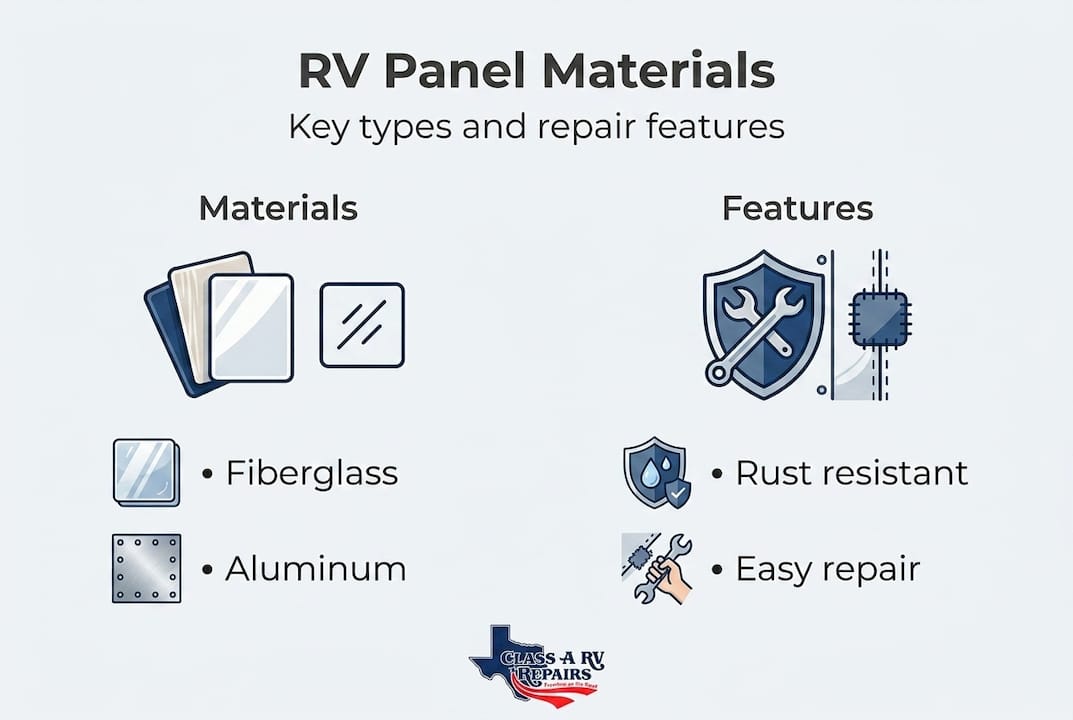
Here’s a quick side-by-side look at how these materials compare:
| Material | Weight | Durability | Avg. cost | Texas suitability |
|---|---|---|---|---|
| Fiberglass | Light | Moderate | Moderate | Good, watch for delamination |
| Aluminum | Light | High | Low to moderate | Excellent overall |
| Composite | Very light | High | High | Excellent, harder to DIY |
| Steel | Heavy | High | Low | Poor, prone to rust |
Steel panels were common on older motorhomes but have mostly been phased out because of rust risk, especially in humid Texas conditions. Fiberglass dominates Class A motorhomes for good reason: it’s paintable, relatively lightweight, and handles UV exposure reasonably well when maintained. Aluminum appears more often on travel trailers and fifth wheels. Composite panels, which bond multiple layers of foam, fiberglass, and other substrates together, are increasingly standard on newer builds.
- Fiberglass: Great paint finish, bonds well, prone to cracking or delamination over time
- Aluminum: Resists rust, lightweight, dents under hail but responds well to PDR for aluminum (paintless dent removal)
- Composite: Best insulation, very light, difficult to match after damage
- Steel: Strong but heavy and rust-prone in Texas humidity
Pro Tip: Aluminum panels are among the easiest to repair after a hailstorm because paintless dent removal works especially well on them. If you travel through hail-prone corridors of Central Texas regularly, aluminum panels could save you significant repair costs. You can also explore a DIY repair tutorial to understand what these repairs involve before you commit to a material choice.
Advantages and drawbacks of each panel material
With an overview of your material options, let’s break down how each stacks up in real-world use, particularly given the climate and road conditions of Central Texas.
Fiberglass is the most common material on Class A motorhomes, and for good reason. It holds paint beautifully, resists UV degradation better than bare aluminum, and can be shaped into the smooth, aerodynamic profiles that make modern motorhomes look sharp. However, fiberglass is vulnerable to delamination, which is when the outer skin separates from the inner foam or wood substrate due to moisture intrusion. In Texas, the cycle of extreme heat and occasional heavy rain accelerates this process.
Delamination repair costs vary dramatically. Minor delamination can be fixed with DIY epoxy injection kits running $100 to $300, while severe cases involving rot or widespread separation require professional rebonding and can cost anywhere from $3,000 to $20,000.
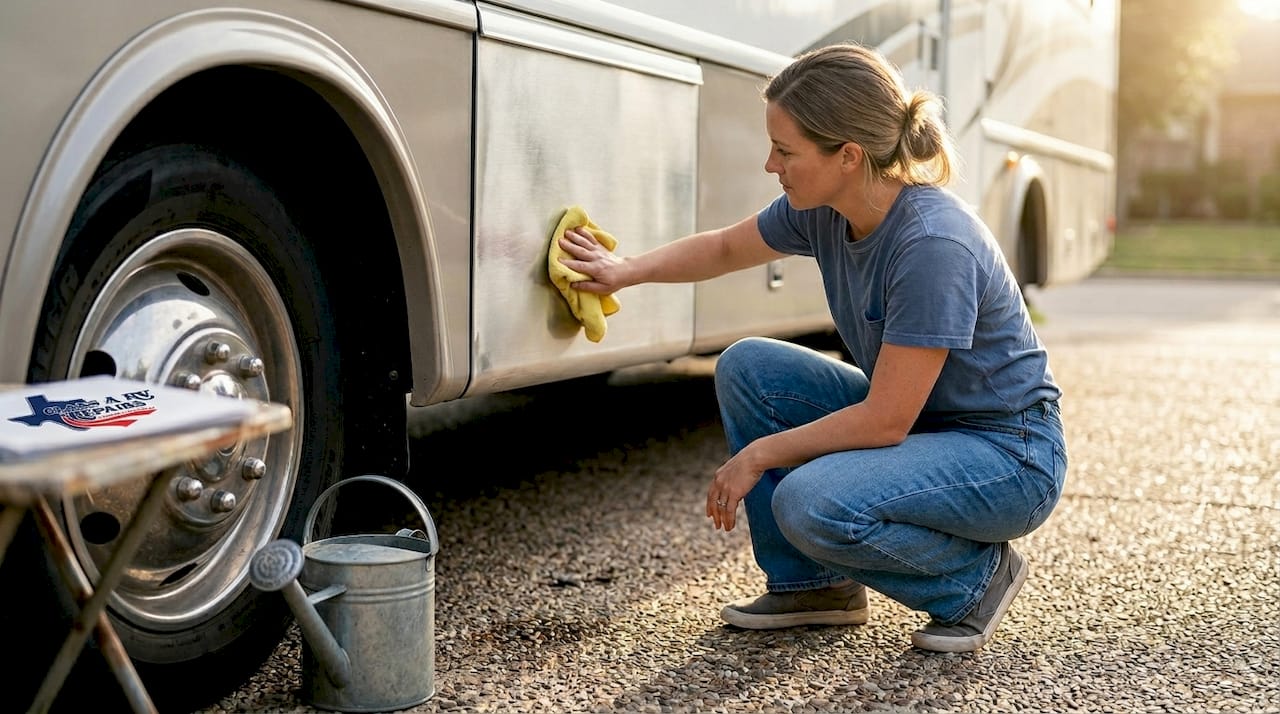
Aluminum panels resist rust naturally, which is a major advantage in any climate. They’re relatively inexpensive to replace if a section gets damaged beyond repair. The downside is that aluminum dents more easily than fiberglass under hail impact, and a significant hailstorm can leave dozens of small dents across the roof and sidewalls. The good news is that paintless dent removal is highly effective on aluminum, keeping repair costs manageable.
Composite panels represent the newest generation of RV body construction. They bond foam insulation between fiberglass or fiberglass-aluminum skins, creating a panel that is lighter, more rigid, and better insulated than older construction methods. The drawback is repair complexity. Matching the factory finish after a patch repair is difficult, and structural damage often requires professional tools and materials. For DIY-minded owners, composite repairs can be genuinely frustrating.
Key considerations when comparing materials for your situation:
- How well does the material handle 100°F+ summers without warping or fading?
- Is the panel compatible with your existing frame and mounting system?
- Can a local shop source matching materials for repairs?
- Will your insurance cover full panel replacement, or only partial repairs?
Explore parts and body upgrades to get a feel for what’s available before you settle on a direction.
Repair and replacement: what to expect
Knowing the strengths and weaknesses of each material, let’s explore what actual repairs entail, from minor fixes to complete panel replacement.
The repair path depends heavily on the material involved and the severity of the damage. Here’s a realistic cost breakdown based on common repair scenarios:
| Repair type | DIY cost range | Professional cost range |
|---|---|---|
| Small fiberglass crack | $20 to $80 | $200 to $600 |
| Fiberglass delamination (minor) | $100 to $300 | $500 to $1,500 |
| Fiberglass delamination (severe) | Not recommended | $3,000 to $20,000 |
| Aluminum hail dents (PDR) | Difficult DIY | $300 to $2,000 |
| Composite panel patch | $50 to $200 | $800 to $3,000 |
| Full panel replacement | Varies widely | $1,500 to $10,000+ |
For minor DIY epoxy injection repairs, a $100 to $300 kit can seal small delamination bubbles before they grow. This approach works when you catch the problem early and the substrate hasn’t rotted. Once moisture has been sitting inside the panel for a season or two, DIY options become inadequate and professional rebonding is the only reliable fix.
Here’s a step-by-step approach for tackling minor damage before calling in a pro:
- Inspect the panel in morning light, pressing gently to find soft spots or bubbles
- Clean and dry the affected area thoroughly before any repair attempt
- Drill small injection holes and apply epoxy using a syringe kit
- Clamp or tape the area flat while the epoxy cures for 24 to 48 hours
- Sand, prime, and paint to blend with the surrounding finish
Pro Tip: Central Texas summers are brutal on repairs that haven’t fully cured. Schedule any DIY repair during cooler months or early morning hours. Heat can cause epoxy to cure too quickly, resulting in a weaker bond. If the damage is extensive, learn what hail damage restoration looks like professionally before deciding whether to DIY. You can also read up on your paint repair options to understand what finishing work is involved after any structural repair.
Choosing the right material for your RV and lifestyle
Understanding costs and repair realities brings us to the big decision: how do you choose the right body panel for your specific needs?
The best material isn’t always the newest or most expensive one. It’s the one that fits how you use your RV, where you travel, and how much maintenance you’re realistically willing to do. DIY epoxy kits and PDR for aluminum dents are your most budget-friendly options for minor damage, but only if the material is suited to those repair methods in the first place.
Ask yourself these questions before making any decision:
- Usage frequency: Full-timers face more UV and weather exposure than weekend users, making durability a top priority
- Travel routes: Do you frequently pass through hail-prone areas like the I-35 corridor or West Texas plains?
- Storage situation: Covered storage dramatically extends the life of fiberglass panels; uncovered storage accelerates UV damage
- Budget tolerance: Can you absorb a surprise $5,000 repair, or do you need a material with predictable, lower repair costs?
- DIY comfort level: Fiberglass and aluminum offer realistic DIY repair windows; composites generally do not
Climate is the factor most Central Texas RV owners underestimate. Heat doesn’t just fade paint. It expands and contracts panel materials repeatedly over time, stressing seams and adhesives. Combined with the moisture from summer storms, this cycle is what drives most delamination cases in this region. A detailed Central Texas repair guide can help you plan preventative maintenance around the seasonal patterns here.
What most RV owners miss about body panel materials
Here’s the truth that doesn’t get said often enough: the cheapest repair today almost always costs more two years from now. We see it constantly in Central Texas. An owner patches a small delamination bubble with tape or low-grade sealant, the Texas sun bakes it through summer, moisture sneaks in during fall rains, and by spring the panel needs professional rebonding at five times the original repair cost.
Choosing a material based solely on upfront cost ignores the local climate reality. The owners who come out ahead financially are the ones who match their panel material to their actual usage conditions and then catch problems early. Lasting DIY repairs are absolutely possible, but only when the material is repairable at the DIY level and the damage is addressed before it spreads.
Get expert help with RV body panel repairs in Central Texas
If navigating these choices feels overwhelming, expert help is close by.
At Class A RV Repairs, we work with all major body panel materials and understand exactly what Central Texas weather demands from your rig. Whether you need a professional assessment of existing damage, help sourcing the right replacement panels through our body parts and upgrades inventory, or a full repair handled by experienced technicians, our RV repair services are built for rigs like yours. Check out our recent repair projects to see the quality of work we deliver. We also work directly with insurance companies to streamline your claim.
Frequently asked questions
What is the most hail-resistant RV body panel material?
Aluminum panels resist rust and are especially practical after hailstorms because PDR works effectively on them, keeping repair costs lower than fiberglass alternatives.
How much does it cost to repair fiberglass RV panel delamination?
Minor delamination repairs using DIY epoxy injection kits run $100 to $300, while severe delamination with rot requires professional rebonding costing $3,000 to $20,000 depending on the affected area.
Can I upgrade to a different body panel material on my existing RV?
Yes, upgrades are possible, but you need to confirm compatibility with your RV’s frame structure and mounting points, and expect custom fitting work from a qualified shop.
Are composite panels worth it for Texas RVs?
Composites offer excellent durability, insulation, and light weight, but they require professional repair when damaged, making them a better fit for owners who prioritize longevity over DIY repairability.
Recommended
- RV bodywork repair tutorial: DIY steps for lasting results
- RV Body Repair in Central Texas: Your Guide to Quality Service
- RV paint repair options in Central Texas: DIY vs. pro
- RV Roof Replacement Cost: Save Money & Choose Right
Jean runs growth strategy at AimSetWin, a performance marketing agency specializing in local service businesses across Texas. he's helped plumbers, HVAC companies, pest control operators, and home service brands build predictable revenue systems using data-driven advertising and conversion optimization.


