

Discover essential travel trailer upgrade ideas tailored for Central Texas. Enhance comfort and safety with our top suggestions today!
TL;DR:
- Owners should focus on simple, cost-effective upgrades like manual leveling blocks and interior decor to improve daily livability in Central Texas. Prioritizing suspension, tires, and power systems addresses regional road and climate challenges for a comfortable, reliable trailer experience. Tailoring upgrades to personal needs and regional conditions maximizes value and ensures long-term satisfaction.
Walk into any RV parts store and the sheer number of upgrades screams for your attention. Every gadget promises to change how you travel, and most of them cost real money. For travel trailer owners in Central Texas, the challenge is even sharper because Hill Country heat, rough caliche roads, and uneven campsites create specific demands that generic upgrade guides rarely address. This article cuts through the noise and gives you a curated list of upgrades evaluated for cost, ease of installation, and real-world impact in Texas conditions.
Table of Contents
- How to choose smart travel trailer upgrades
- Leveling systems: Manual vs. electric options
- Comfort and efficiency: Interior upgrades that make a difference
- Suspension, tires, and power: Upgrades for Central Texas roads
- Upgrade comparison chart: Finding the right fit
- Our take: Smart upgrade strategies Texas owners actually use
- Ready to upgrade your travel trailer? Expert help in Central Texas
- Frequently asked questions
Key Takeaways
| Point | Details |
|---|---|
| Prioritize essentials | Leveling, suspension, and power upgrades offer the biggest impact for Central Texas travelers. |
| Budget with data | Manual systems and lightweight decor upgrades stretch your dollar and last longer than many high-tech options. |
| Test before big changes | Try reversible interior tweaks before committing to permanent modifications. |
| Local conditions matter | Choose upgrades suited to heat, humidity, and variable campground terrain in Texas. |
How to choose smart travel trailer upgrades
Before spending a dime, build a short personal checklist. Your goals probably fall into four categories: comfort, safety, cost efficiency, and style. Knowing which one matters most to you right now will save you from buying a slick gadget you rarely use.
Central Texas throws specific curveballs at trailer owners. Summer temperatures routinely push past 100°F, campsite soil can shift from rock-hard caliche to soft creek-bottom sand within the same park, and the roads between San Antonio and Fredericksburg can rattle loose connections faster than almost anywhere else in the state. Good maintenance best practices tie directly into smart upgrade decisions, because some upgrades simply prevent repair bills later.
When you evaluate any upgrade, run it through three quick questions. First, will it solve a recurring headache? Second, does it add durable value without adding significant weight? Third, will it still matter if you sell the trailer in three years?
- Identify your top pain point (leveling, climate, rough ride, looks).
- Research the repair or replacement cost if you skip the upgrade.
- Compare DIY versus professional installation for your skill level.
- Check resale data for your specific trailer model before major investments.
Pro Tip: Start with upgrades that improve daily usability before diving into cosmetic projects. A trailer that camps comfortably will get used more, and frequent use pays off the upgrade investment faster.
RV leveling data confirms that manual systems are cheaper long-term but less convenient, while auto systems risk failures on the uneven or soft ground common at Central Texas sites, making a hybrid approach with blocks a smart default.
Leveling systems: Manual vs. electric options
Getting level is not optional. A trailer that sits even slightly off creates door alignment issues, appliance strain, and uncomfortable sleeping. The question is which system fits your camping style.
Manual leveling blocks, specifically brands like Lynx or Beech Lane wedges, are the workhorse choice for budget-focused owners. According to long-term cost comparisons, manual blocks run about $270 over ten years and hold up on soft ground where automatic systems can sink or misread grade. Electric jack systems average around $840 over five years once you factor in occasional motor repairs and sensor replacements.
The hybrid approach wins for most Central Texas owners. You get the speed of electric jacks for paved sites and the reliability of manual blocks as backup on soft or rocky ground. Look at a real-world travel trailer example to see how this setup works in practice on a popular model.
| System type | 10-year cost | Best for | Weakness |
|---|---|---|---|
| Manual blocks | ~$270 | Soft or uneven ground | Takes more time to set up |
| Electric jacks | ~$840 | Paved parks, convenience | Can fail on soft soil |
| Hybrid combo | ~$500 | Versatile use | Requires storing both tools |
Key things to remember when choosing a system:
- Lynx interlocking blocks stack and store flat under your trailer.
- Electric jacks require regular lubrication to prevent motor strain.
- Always test your system on similar terrain to where you usually camp.
- Soft soil common in Central Texas creek areas can fool auto-leveling sensors.
Pro Tip: Carry a set of manual blocks even if you have electric jacks. When a sensor fails three hours from the nearest RV dealer, those blocks will save your weekend.
For more context on keeping your leveling system in good shape over time, review trailer maintenance tips before your next trip.
Comfort and efficiency: Interior upgrades that make a difference
Your trailer’s interior is where you actually live, and small changes there pay back in daily comfort far more than big mechanical projects. The best part is that most interior upgrades cost very little and can be reversed completely when you want a fresh look.
Practical interior personalization confirms that peel-and-stick wallpaper, lightweight vinyl tile backsplashes, colorful textiles like pillows and rugs, and Velcro-secured art all add personality without adding meaningful weight. Light colors specifically help the interior feel larger and cooler, which matters enormously when Central Texas summer temperatures make your rig feel like a slow cooker.
“Light colors expand space feel and reduce the visual heaviness that makes small interiors feel cramped. Quick-change decor lets owners refresh their space for different seasons or resale prep without gutting the interior.” — RV interior design guidance from Travels With Ted
Interior upgrades that deliver the best return:
- Peel-and-stick wallpaper on accent walls adds color without permanent adhesive damage.
- Vinyl tile backsplash strips behind the kitchen sink protect walls and look sharp.
- Layered lighting using LED strips under cabinets reduces eye strain at night.
- Lightweight area rugs reduce noise and make bare floor areas feel finished.
- Velcro picture hangers secure art without screws that would void warranties.
You can see what a freshened-up interior looks like in this upgraded interior example on a Grand Design Imagine. For those dealing with weathered exterior surfaces alongside the interior work, restoration advice covers the full package.
Suspension, tires, and power: Upgrades for Central Texas roads
The roads between Hill Country campgrounds are not gentle. State highways between Kerrville and Junction feature long stretches of patched asphalt, and many private camp roads are unpaved entirely. Your suspension and tires absorb every one of those impacts.
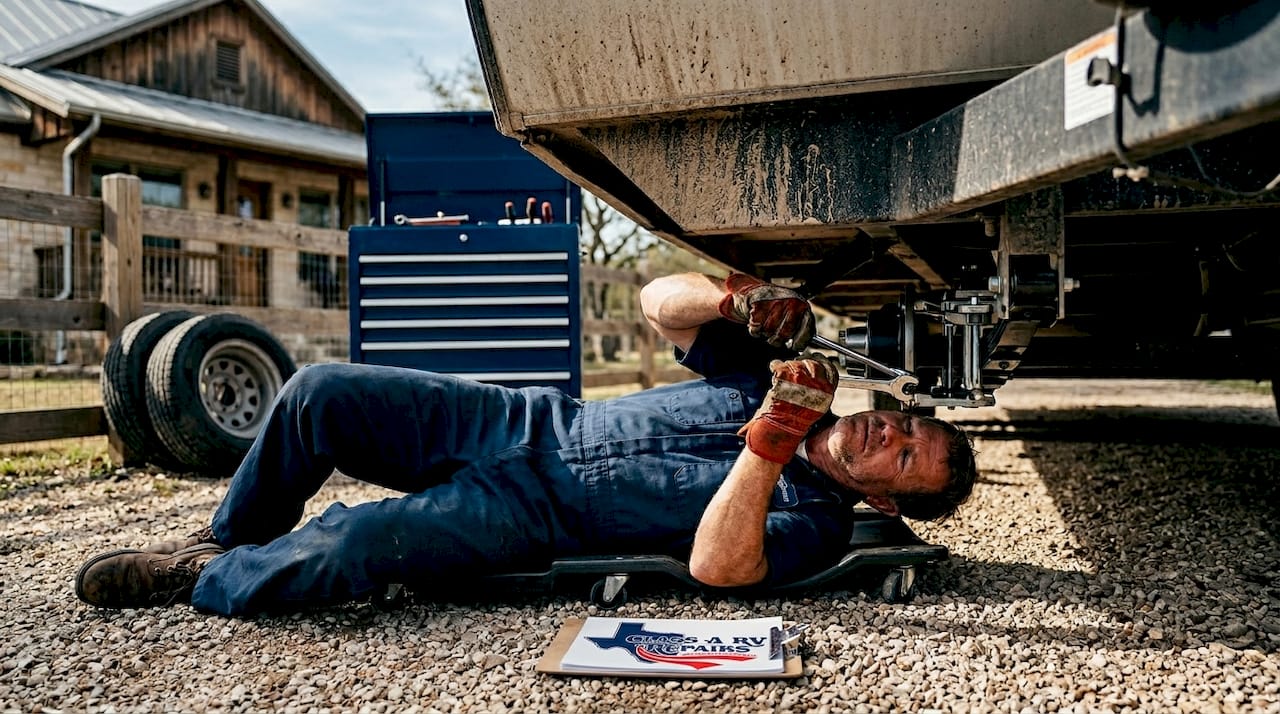
Aftermarket suspension kits, specifically load-leveling shocks and sway bars designed for travel trailers, reduce that side-to-side rocking that wears on connections and wears on you. Tire upgrades to higher-load-rated options help on roads where sharp gravel edges are common. On the power side, lithium batteries are a popular upgrade because they hold charge longer and weigh less than lead-acid units, though there is an important catch.
Owner experience data shows that over-inflated tires after a suspension upgrade actually produce a rougher ride, not a smoother one. Drop to your trailer’s placard PSI after any suspension change and feel the difference. The same source notes that adding lithium batteries without upgrading your converter limits charging to roughly 80% capacity, leaving performance gains on the table.
| Upgrade | Estimated cost | Difficulty | Main benefit |
|---|---|---|---|
| Aftermarket shocks | $200 to $500 | Moderate | Reduces sway and road noise |
| Load-rated tires | $400 to $700 | Easy | Handles rough terrain better |
| Lithium battery upgrade | $600 to $1,200 | Moderate | Longer off-grid power |
| Converter upgrade | $150 to $300 | Moderate | Needed to maximize lithium |
Pro Tip: Check tire PSI after any suspension upgrades rather than assuming factory settings still apply. A few PSI adjustments can change the ride quality dramatically on rough Texas back roads.
For context on how body panel upgrades work alongside suspension improvements, and for a broader look at your undercarriage, check out the suspension maintenance guide for detailed steps.
Upgrade comparison chart: Finding the right fit
Now that all four major upgrade categories are on the table, a direct comparison helps you decide where to spend first.
| Upgrade category | Estimated 5-year cost | Complexity | Impact score (1 to 5) |
|---|---|---|---|
| Manual leveling blocks | ~$270 | Very easy | 4 |
| Electric leveling jacks | ~$840 | Professional install | 3 |
| Interior decor refresh | $100 to $400 | Very easy | 5 |
| Suspension kit | $200 to $500 | Moderate | 4 |
| Lithium battery system | $750 to $1,500 | Moderate | 5 |
| Tire upgrade | $400 to $700 | Easy | 4 |
Long-term leveling cost research puts manual blocks at a clear financial advantage, and interior upgrade research confirms that lightweight decor changes score highest for immediate livability impact at the lowest cost entry point.
Pick your path based on your main goal:
- Tight budget: Start with manual leveling blocks and interior decor. Total investment under $500.
- Comfort focus: Add a suspension kit and interior lighting overhaul to transform daily livability.
- Frequent camper: Prioritize lithium batteries and a converter upgrade for reliable off-grid power.
- Resale prep: Focus on exterior condition and interior freshness using the example at this recent upgrade showcase.
Our take: Smart upgrade strategies Texas owners actually use
Here is the honest truth that most upgrade guides skip entirely. The owners who feel the most satisfied with their trailers are almost never the ones who chased the latest tech gadgets. They are the ones who fixed the small daily annoyances first and built from there.
The most common mistake we see in Central Texas? Owners skip weight calculations before adding upgrades, especially battery banks and suspension components together. Add too much weight to the wrong axle position and you create tire wear and handling problems that erase every comfort gain.
The most underrated upgrades, consistently, are insulation improvements, blackout curtains, upgraded soft goods, and lighting changes. None of them are flashy. All of them make every single night in the trailer noticeably better. As one long-time Texas RV owner put it: “Game-changer upgrades are almost always the ones that quietly solve daily annoyances.”
Spend money where you spend the most time or effort. If you level your trailer manually every trip and dread it, that is where your first dollar goes. If you lie awake sweating through thin curtains on July nights near Garner State Park, blackout insulated curtains will do more for your sleep than a new sound system. Our RV restoration insights reflect the same principle: fix what bothers you most, and build outward from that foundation.
Ready to upgrade your travel trailer? Expert help in Central Texas
Choosing the right upgrades is only half the equation. Getting them installed correctly ensures they actually deliver the benefits you expect for years of worry-free travel on Texas roads and campsites.

At Class A RV Repairs, we work with travel trailer owners across Central Texas and the Hill Country to assess, plan, and execute upgrades that make real sense for your rig and your camping style. Whether you need a suspension tune-up, electrical system work, or a full interior refresh, our team handles it all from our purpose-built facility with parts stocked on-site. Browse our RV repair and upgrade services, review the RV repair costs guide so you can plan your budget, or explore your camping repair options if you need service while you are already on the road.
Frequently asked questions
What are the most cost-effective travel trailer upgrades?
Manual leveling blocks cost around $270 over ten years, and removable interior decor like peel-and-stick wallpaper and textiles adds comfort without heavy investment, making these two categories the best starting point for budget-focused owners.
How can I make my travel trailer feel bigger without major remodeling?
Strategic use of light-colored decor combined with mirrors and removable accents creates an open, airy feel without touching a single wall stud.
Are electric leveling jacks worth it for Central Texas owners?
Electric jacks save setup time at improved parks but carry higher costs and a real risk of failure on the soft or uneven terrain found at many Central Texas campgrounds, so most owners benefit from keeping manual blocks on board regardless.
What should I upgrade first if I camp mostly in Central Texas?
Suspension, power management, and climate control improvements address the three biggest regional challenges: rough roads, off-grid energy demands, and relentless summer heat, with tire and suspension data specifically confirming that matching PSI to your placard after an upgrade is essential.
Recommended
- Maintain your travel trailer: tips for 2026 performance
- Travel Trailer Repair in Central Texas: Expert Guide
- RVs for Sale | Motorhomes, Travel Trailers & Fifth Wheels
- Essential RV maintenance checklist for Central Texas owners
Jean runs growth strategy at AimSetWin, a performance marketing agency specializing in local service businesses across Texas. he's helped plumbers, HVAC companies, pest control operators, and home service brands build predictable revenue systems using data-driven advertising and conversion optimization.


