

Discover what RV tire and wheel service entails to protect your RV and ensure safety on the road. Learn essential tips for a worry-free journey!
TL;DR:
- RV tire issues are the leading cause of roadside emergencies, requiring specialized maintenance.
- Regular professional service and regional awareness are essential to prevent blowouts and prolong tire life.
- Understanding warranty coverage and choosing experienced shops ensures effective repair and insurance support.
Tire problems are the last thing most RV owners think about when planning a trip through the Texas Hill Country, but tire issues rank as the number one cause of RV roadside emergencies. That’s not a small statistic to brush past. It means your beautiful motorhome, fifth wheel, or travel trailer is more likely to strand you on the side of Highway 290 because of a tire than any other mechanical failure. Most RV owners underestimate how specialized, frequent, and consequential proper tire and wheel service really is. This guide breaks down everything you need to know, from routine maintenance to navigating insurance claims after hail or road hazard damage in Central Texas.
Table of Contents
- What is RV tire and wheel service?
- Why regular tire and wheel service matters for RV safety
- Dealing with road hazards: insurance, warranties, and real-world solutions
- Choosing a Central Texas RV tire and wheel service: what to look for
- The uncomfortable truth most RV owners miss about tire care
- Get expert RV tire and wheel service in Central Texas
- Frequently asked questions
Key Takeaways
| Point | Details |
|---|---|
| Frequent tire risks | RV tires face more hazards than most realize, especially in Central Texas. |
| Service prevents breakdowns | Regular RV tire and wheel care dramatically lowers your chance of roadside emergencies. |
| Insurance gaps | Manufacturer warranties usually exclude hazards like potholes and debris. |
| Specialized local providers | Choose Central Texas RV shops with expertise in collision, hail, and road hazard claims. |
What is RV tire and wheel service?
Professional RV tire and wheel service is not the same as pulling into a quick-lube shop that handles passenger cars. It covers a specific range of inspections and repairs designed for vehicles that are far heavier, larger, and more complex than any truck or SUV on the road.
Here’s what a complete RV tire and wheel service typically includes:
- Tire inspection: Checking for cracks, bulges, weathering, tread depth, and sidewall damage
- Inflation check: Setting tire pressure to match the RV’s actual loaded weight
- Balancing: Using specialized equipment calibrated for heavy RV loads and dual rear wheel configurations
- Rotation: Moving tires to even out wear patterns unique to motorhomes and towable RVs
- Alignment: Ensuring the chassis pulls straight, which prevents uneven wear on expensive tires
- Repair or replacement: Patching minor punctures or swapping out tires that are past their safe service life
The contrast with standard auto tire service is significant. A regular tire shop balances a 50-pound car wheel. An RV service tech may be balancing a dual rear wheel assembly on a Class A motorhome weighing 30,000 pounds or more. The equipment, the torque specs, the inflation targets, and the inspection criteria are all different.
“Tire issues are the top roadside event for RVers, underscoring the importance of regular, specialized tire service.”
Central Texas adds its own layer of complexity. Summer temperatures frequently crack the 100-degree mark, and UV exposure accelerates rubber degradation faster than in cooler climates. Hailstorms, which are common in the Hill Country, can cause sidewall damage that isn’t visible to the untrained eye. Long highway runs between San Antonio, Austin, and Fredericksburg mean your tires spend serious time at highway speed under heavy load. Experienced RV service centers understand all of these regional factors and factor them into every inspection.
Why regular tire and wheel service matters for RV safety
Now that you understand what’s covered in tire and wheel service, let’s talk about what’s at stake when you skip it, especially in Central Texas.
A blowout on a 40-foot motorhome at highway speed is not like a flat tire on a sedan. The force involved can cause a driver to lose control entirely, leading to rollovers, collisions, and serious injuries. Poor tire pressure also increases stopping distance, which matters enormously when you’re hauling tens of thousands of pounds. Uneven wear quietly degrades your handling long before you notice anything is wrong.
Real-world data puts this in perspective. One widely cited account from experienced RVers replaced 10 tires in just two years of active travel, a pace most new RV owners never anticipate. That’s not bad luck. That’s the normal reality of putting a large, heavy vehicle through real-world road conditions, often on roads that weren’t designed with RVs in mind.
| Service approach | Cost (estimated) | Downside risk | Stress level |
|---|---|---|---|
| Proactive tire service | $150 to $400 per visit | Minimal | Low |
| Reactive blowout repair | $600 to $2,500+ | Safety risk, roadside delay | Very high |
| Skipping service entirely | $0 short-term | Major breakdown risk | Extreme |
The heat in Texas is a genuine accelerant for tire wear. Rubber compounds break down faster at high temperatures, and tires that look fine in April can be compromised by July without any visible warning signs. Following preventative maintenance tips specific to the Central Texas climate can save you thousands of dollars and a lot of frustration.
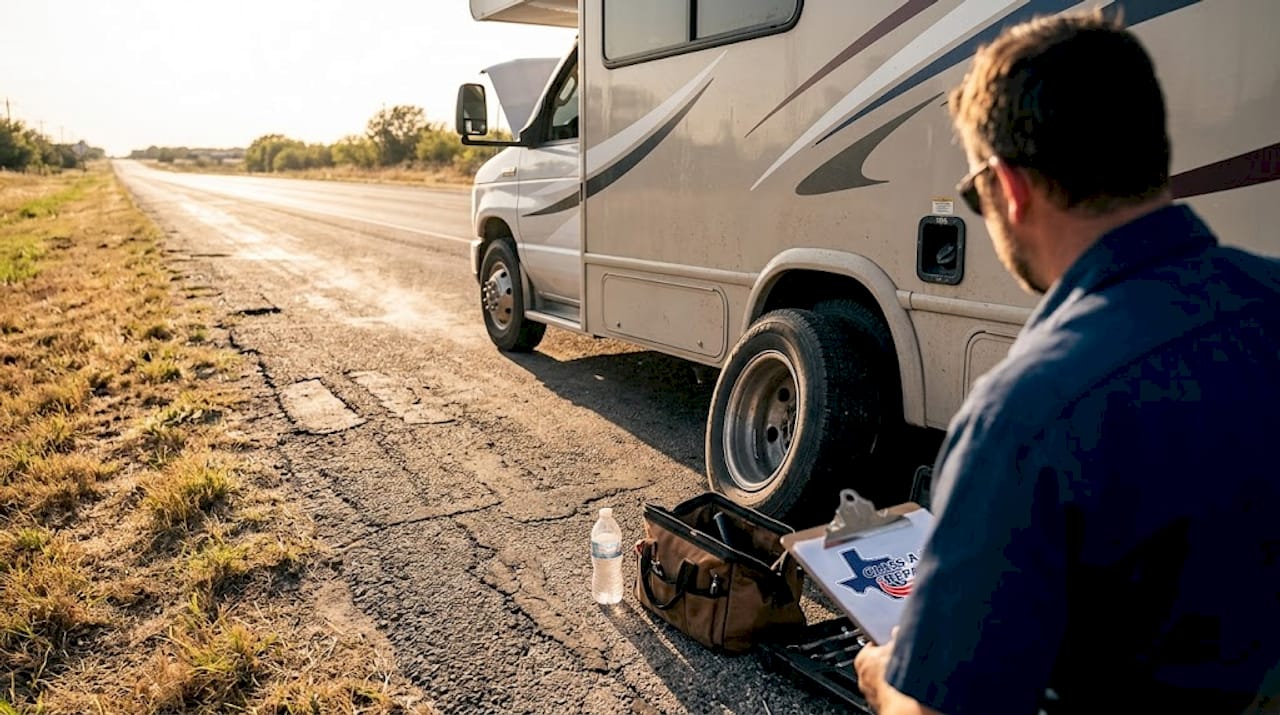
Pro Tip: Schedule a professional tire inspection before Memorial Day weekend. That’s when Texas RV traffic peaks and when heat-related tire failures spike. Getting ahead of the season means you’re not competing for shop appointments when everyone else is also trying to get back on the road.
Dealing with road hazards: insurance, warranties, and real-world solutions
Understanding the importance of ongoing service, it’s equally vital to know how to respond when a tire or wheel problem does strike, especially given the hazards unique to Texas roads.
Here’s the part most RV owners get wrong: they assume their tire warranty covers whatever goes wrong. It usually doesn’t. Manufacturer warranties cover defects in materials and workmanship. They do not cover what actually causes most tire failures in Central Texas, which includes potholes, roofing nails, gravel debris on rural highways, and hailstones.
Road hazard warranties from retailers like Discount Tire specifically cover damage from potholes, nails, and blowouts caused by road debris. This distinction matters enormously. An RV owner relying solely on a manufacturer warranty may find themselves paying out of pocket for a repair that a road hazard plan would have covered entirely.
Here’s what to look for when evaluating your coverage options:
- Road hazard warranty: Covers nails, potholes, debris, and blowouts caused by road conditions
- Manufacturer warranty: Covers factory defects only, rarely applies to real-world damage
- RV insurance rider: May include roadside assistance and some tire coverage depending on your policy
- Collision and hail coverage: Requires a separate claim through your insurer, handled by specialized shops
| Damage type | Manufacturer warranty | Road hazard warranty | RV insurance |
|---|---|---|---|
| Factory defect | Yes | No | No |
| Pothole damage | No | Yes | Sometimes |
| Hail damage | No | No | Yes (with coverage) |
| Blowout from debris | No | Yes | Sometimes |
Pro Tip: Before your next trip, call your insurer and your tire provider and ask one direct question: “If I hit a pothole and damage a tire and wheel on a Texas highway, what exactly is covered?” The answer will tell you whether you need to add a road hazard plan.
Shops that specialize in RV body shop services are also set up to handle the insurance paperwork when hail or collision damage is involved. That makes a huge practical difference when you’re dealing with the stress of a trip interrupted by a storm. You can also save time by scheduling RV service online and getting an appointment before trouble finds you.
Choosing a Central Texas RV tire and wheel service: what to look for
With a clear picture of both routine and emergency RV tire care, you’re ready to choose the right Central Texas service provider.
Not all tire shops are created equal. A shop that handles pickup trucks all day is not automatically ready to service a 35,000-pound Class A motorhome. Here’s a numbered list of what to verify before you commit:
- RV-specific experience: Ask directly how many RV tire services they complete per month and what types of rigs they handle.
- Proper equipment: Large-format balancing machines and air systems capable of handling 110+ PSI are non-negotiable for motorhome service.
- Insurance and claims handling: A quality shop should be able to work directly with your insurer, especially for hail or collision-related wheel damage.
- Road hazard warranty options: Ask if they offer or honor third-party road hazard plans, and which ones they recommend for RVers.
- Inventory depth: A shop with RV-specific tire stock on hand will get you back on the road faster than one that has to order from a warehouse.
- Convenience features: On-site waiting, scheduling flexibility, and a location that’s easy to navigate with a large rig all matter when you’re traveling.
“The best RV tire shops don’t just perform the service. They walk you through your local risks, explain your warranty options, and advocate with your insurer when something goes wrong.”
Choosing a shop capable of quality RV body repair alongside tire service means you have one trusted partner for nearly any road damage scenario, which is exactly what you want when you’re far from home.
The uncomfortable truth most RV owners miss about tire care
Here’s what most tire guides won’t tell you directly: routine checks are necessary, but they’re not enough on their own.
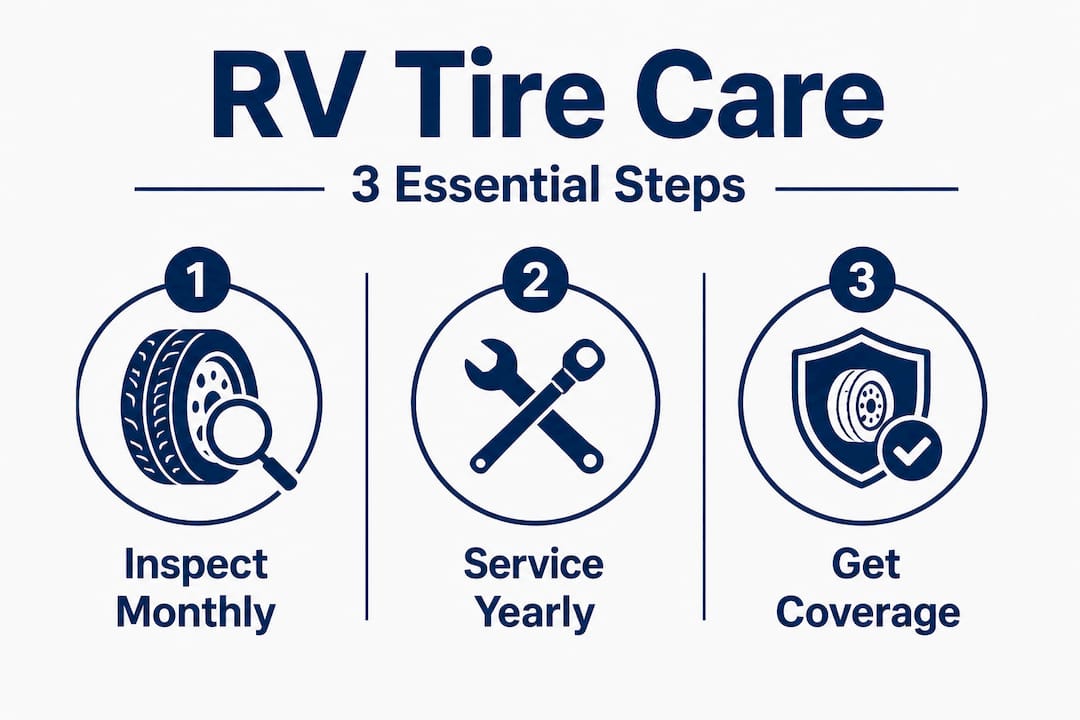
Most RV owners think they’re covered if they check tire pressure and look for obvious wear before each trip. That mindset works for cars. For RVs, it creates a false sense of security. The real risk isn’t gradual, visible wear. It’s the sudden, unpredictable hazard. A storm the night before drops debris on your route. A road crew left a nail strip near a construction zone. A hailstorm catches you in transit. None of those risks respond to a pressure gauge.
That’s why road hazard coverage and a relationship with a specialized local shop are often worth more than any amount of preventive maintenance. When the unexpected hits, you need someone who can assess the damage, handle the insurance call, and get you moving again quickly. Understanding RV repair costs ahead of time also removes the shock that comes with emergency repairs and helps you make faster decisions.
The best shops we’ve seen in Central Texas do something most people don’t expect. They coach their customers. They explain what road conditions to watch for on specific routes, which tire brands hold up better in summer heat, and exactly what their insurance policy does and doesn’t include. That kind of advocacy is what separates a shop worth trusting from one that simply swaps rubber.
Get expert RV tire and wheel service in Central Texas
Armed with knowledge and practical steps, here’s where you can find the expert support every RV owner in Central Texas should have on speed dial.
At Class A RV Repairs, we work specifically with RV owners across the Hill Country and Central Texas region. Our purpose-built facility handles everything from routine tire inspections to hail damage and collision repairs on full-size motorhomes, fifth wheels, and travel trailers. We work directly with insurance companies, carry on-site parts inventory, and even offer on-site camping while your rig is in service.
Don’t wait for a blowout on I-10 to think about your tires. Our team is ready to inspect, advise, and act. Explore our full range of RV repair services and find out how straightforward it can be to protect your investment. If you’ve already experienced road hazard or weather damage, check out our collision repair options to get back on the road with confidence.
Frequently asked questions
How often should RV tires be replaced?
RV tires should typically be replaced every 5 to 7 years, but real-world replacement frequency depends heavily on usage, load, and road conditions. Frequent inspections by an RV specialist are more reliable than calendar-based timing alone.
Does insurance cover RV tire blowouts in Texas?
Standard RV insurance rarely covers blowouts directly, but road hazard warranties often include damage from potholes, nails, and road debris. Review both policies before assuming you’re covered.
Can I use regular auto tire service centers for my RV in Central Texas?
Standard auto shops typically lack the specialized equipment and training needed for RV tires, particularly for larger motorhomes with dual rear wheels. An RV-specific shop provides safer, more accurate service for your rig.
Why do RV tires wear out faster in Central Texas?
The combination of intense heat and road conditions in Central Texas degrades rubber compounds faster than in cooler climates, especially during long summer highway trips. UV exposure and occasional hail add to the wear pressure.
Do RV tire warranties include hail or collision damage?
Most tire warranties exclude hail or collision damage entirely, but specialized Central Texas RV repair shops can help you file insurance claims and coordinate repairs for those specific situations.
Recommended
- Signs your RV needs repair: top warning flags for 2026
- RV chassis service explained: protect your RV investment
- RV Emergency Repair Checklist: Essential Steps for Quick Fixes
- RV Repair Services for Motorhomes, Travel Trailers & 5th Wheels
Jean runs growth strategy at AimSetWin, a performance marketing agency specializing in local service businesses across Texas. he's helped plumbers, HVAC companies, pest control operators, and home service brands build predictable revenue systems using data-driven advertising and conversion optimization.


