

Learn how to extend your RV's lifespan with a step-by-step preventative maintenance guide built for Central Texas motorhome and travel trailer owners.
TL;DR:
- Most RV breakdowns in Texas result from neglected maintenance over time. Regular checks and proper supplies can prevent expensive repairs. Consistent verification and professional support ensure long-term RV reliability.
Most RV breakdowns don’t happen out of nowhere. They build quietly over months of skipped checks, ignored seals, and batteries slowly dying in the Texas heat. For Central Texas RV owners, the climate alone puts extra stress on every system in your motorhome or travel trailer. The good news is that most expensive repairs are completely avoidable. This guide walks you through exactly what you need, what to do, and how to stay on schedule so your RV stays reliable for years to come.
Table of Contents
- What you need for preventative maintenance
- Step-by-step preventative maintenance essentials
- Common mistakes and troubleshooting
- Verifying your work and scheduling ongoing maintenance
- Why preventative RV maintenance is a long-term investment
- Professional RV maintenance support in Central Texas
- Frequently asked questions
Key Takeaways
| Point | Details |
|---|---|
| Consistent maintenance matters | Monthly and seasonal checks drastically cut costly repair risks for RVs. |
| Battery care is crucial | Using distilled water and preventing sulfation can double your battery’s lifespan. |
| Track and log tasks | A logbook and reminders ensure you never miss vital preventative steps. |
| Avoid common pitfalls | Simple mistakes like using tap water or skipping battery checks lead to expensive breakdowns. |
| Know when to call a pro | For complex, urgent, or confusing maintenance, Central Texas experts are ready to help. |
What you need for preventative maintenance
To begin mastering your RV’s preventative upkeep, you’ll need the right preparation. Showing up to a maintenance session without the right supplies is like trying to cook without ingredients. You’ll waste time, cut corners, and miss things that matter.
Here’s what to keep on hand:
- Distilled water for flooded type batteries (tap water introduces minerals that cause buildup)
- Battery voltage tester to catch weak cells before they fail
- Rubber-safe lubricant for slide-outs, door seals, and hinges
- Cleaning brushes for battery terminals and tight spaces
- Nitrile gloves to protect your hands from acid and grease
- Lap sealant and caulk for roof and seam repairs
- Tire pressure gauge calibrated for RV load ratings
Always work in a shaded, level area. Central Texas summers can push temperatures well past 100°F, and working under direct sun is both dangerous and counterproductive. Heat causes tools to slip, materials to dry too fast, and you to rush.
Before you start any session, pull up your RV maintenance checklist to make sure nothing gets overlooked. A checklist turns guesswork into a system.
| Supply | Purpose | Replacement frequency |
|---|---|---|
| Distilled water | Battery top-off | As needed |
| Lap sealant | Roof seam repair | Annually or as needed |
| Lubricant spray | Slide-outs and seals | Every 3 months |
| Voltage tester | Battery health check | Every month |
Pro Tip: Start a paper or digital maintenance logbook. Write down every task you complete, the date, and any issues you noticed. This single habit makes it far easier to spot patterns, catch recurring problems early, and prove proper care if you ever sell your RV.
Step-by-step preventative maintenance essentials
With the right preparations, you can confidently move on to preventative steps. Think of this as your recurring playbook, broken into monthly, quarterly, and biannual tasks.
Monthly tasks:
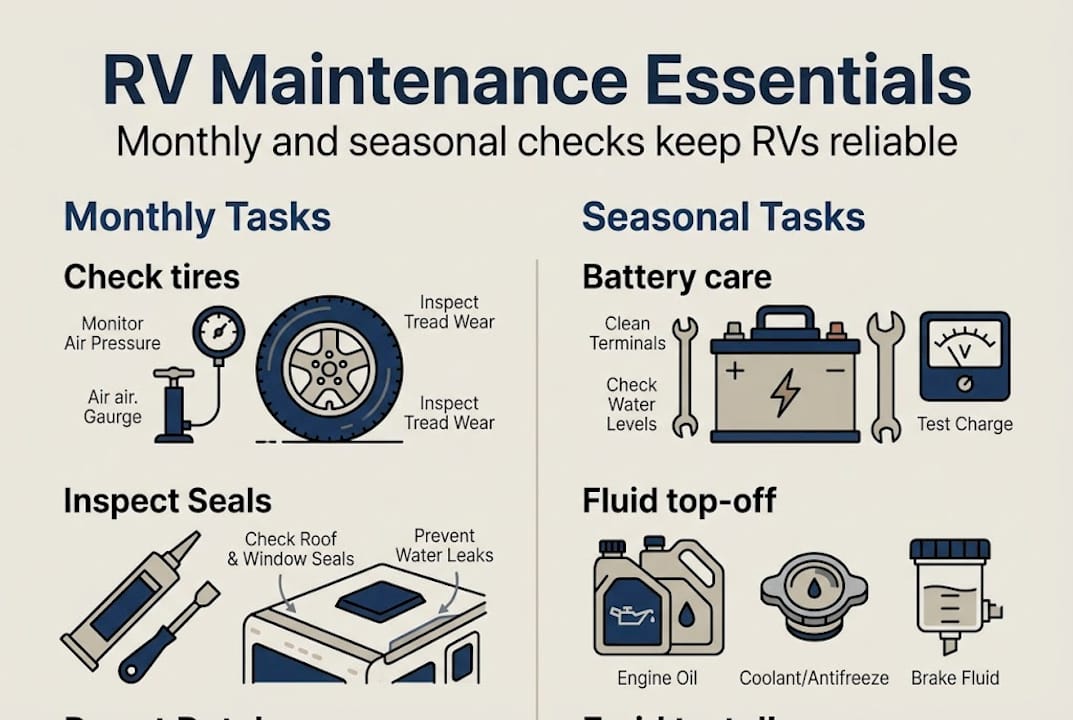
- Check battery voltage and water levels. Battery lifespan runs 3 to 5 years with proper care, but only if you stay on top of monthly checks. Use distilled water for flooded types and clean the terminals with a wire brush.
- Inspect tire pressure using your load-rated gauge. Underinflated tires wear unevenly and blow out faster, especially on Texas highways in summer.
- Walk the exterior and check all seals around windows, doors, and roof edges. Catching a small crack early costs almost nothing. Missing it costs thousands.
Quarterly tasks:
- Get on the roof and inspect the entire surface for soft spots, cracks, or lifted sealant. Texas UV exposure breaks down roofing materials faster than in most other states.
- Lubricate all slide-out mechanisms and rubber seals with a rubber-safe product. Dry seals crack and tear, which leads to leaks and costly common RV repair mistakes.
- Check for any caulking issues around vents, skylights, and exterior compartments.
Biannual tasks:
- Change engine oil, transmission fluid, and coolant according to your manufacturer’s specs. Review travel trailer tips specific to your rig type.
- Test your brakes and inspect brake pads for wear.
- Check the propane system for leaks using soapy water on all connections.
“Sulfation is the top cause of RV battery failure, especially in heat.”
Pro Tip: In Texas, rubber components like tire sidewalls and door seals take a beating from UV rays. Apply a UV-protectant spray to exposed rubber every three months to slow the breakdown.
Common mistakes and troubleshooting
Even with regular care, it’s easy to make simple but costly mistakes. The most common ones aren’t dramatic. They’re small habits that quietly compound over time.
Top mistakes RV owners make:
- Using tap water instead of distilled water in flooded batteries, which causes mineral buildup and accelerates failure
- Leaving the battery connected during long-term storage, which drains it completely and triggers sulfation
- Skipping the maintenance log, making it impossible to track what was done and when
- Ignoring small roof cracks until water intrusion causes structural damage
| Action | Correct approach | Incorrect approach |
|---|---|---|
| Battery water | Distilled water only | Tap water |
| Storage prep | Disconnect battery | Leave connected |
| Terminal cleaning | Wire brush, clean connectors | Skip cleaning |
| Voltage check | Monthly with a tester | Only when problems appear |
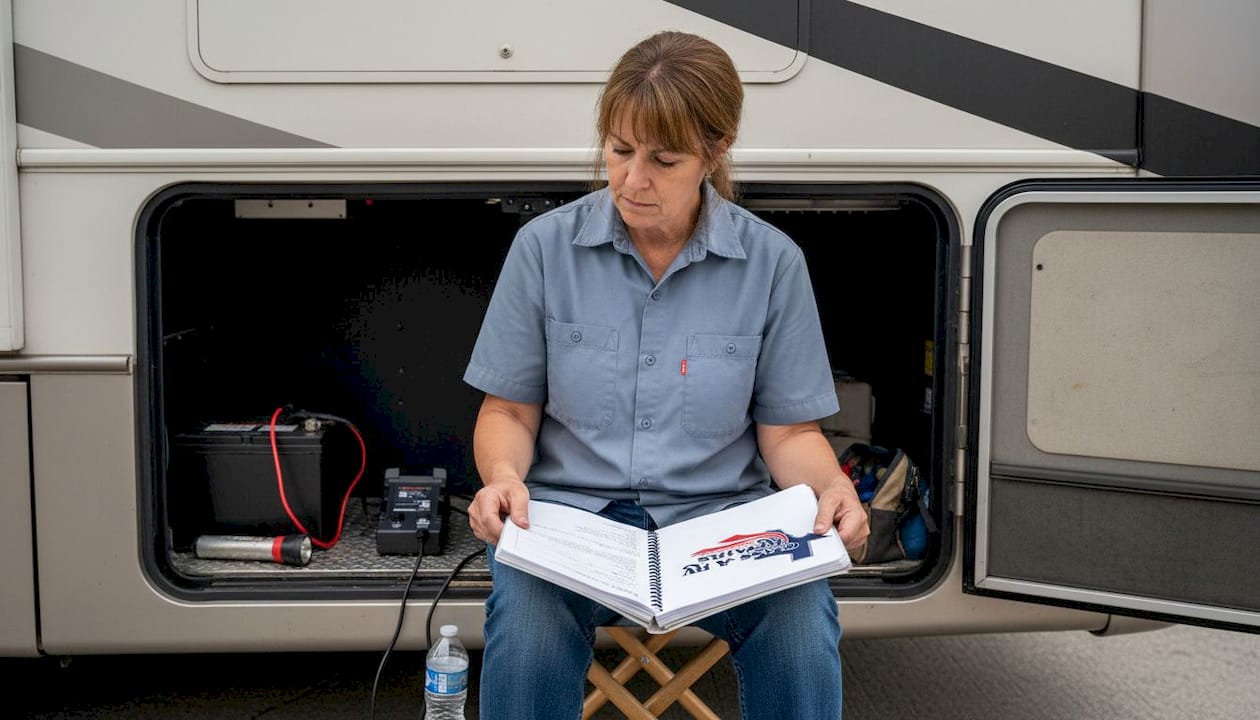
If your battery is dead after storage, first check if it will hold a charge after a full slow charge cycle. If it won’t, it likely has battery failure from sulfation and needs replacement. For a leaking roof, dry the area completely, apply fresh lap sealant, and monitor it over the next two rain events.
For a broader look at what goes wrong and how to fix it, check out RV repair warning signs and review the full list of RV maintenance mistakes that Central Texas owners commonly make.
Verifying your work and scheduling ongoing maintenance
Mistake-proofing isn’t enough. Ensuring your efforts yield results is the final piece. Completing a task is only half the job. Confirming it was done correctly is what actually protects your investment.
Here’s how to verify and lock in your maintenance routine:
- After battery service: Test voltage with your tester. A fully charged 12V battery should read between 12.6V and 12.8V. Anything under 12.4V means it didn’t charge fully or has a weak cell.
- After seal and roof work: Run water over the repaired area and check inside for any moisture within 30 minutes.
- After fluid changes: Check for drips under the vehicle after the first short drive. Look at the dipstick again 24 hours later.
- After tire inflation: Re-check pressure the following morning when tires are cold for the most accurate reading.
- Log everything: Write the date, task, and result in your maintenance logbook. Set a calendar reminder for the next scheduled check.
The payoff is real. Proper battery care can extend life to 5 years, compared to roughly 2 years with neglect. That’s one example of how consistent verification turns maintenance from a chore into a money-saving habit. When it’s time to schedule regular RV service, your logbook becomes your best asset.
Why preventative RV maintenance is a long-term investment
Here’s the perspective most guides skip: the owners who say they “save money” by skipping maintenance are usually the ones calling for emergency roadside service in August, 200 miles from home. We’ve seen it repeatedly. A $10 bottle of distilled water and 20 minutes a month can prevent a $400 battery replacement. A quarterly roof inspection prevents a $3,000 water damage repair.
The Texas climate doesn’t give you a grace period. Heat accelerates every form of wear, from rubber to electrical systems. Monthly attention isn’t optional here. It’s the baseline. The owners who treat their RV like a home, not just a vehicle, are the ones still rolling comfortably five years from now. Skipping maintenance to avoid costly RV mistakes is one of the most reliable ways to end up making them anyway.
Professional RV maintenance support in Central Texas
Sometimes, a qualified technician is the best investment for your RV’s future. DIY maintenance goes a long way, but there are moments when a professional set of eyes catches what you can’t.

At Class A RV Repairs, we serve Central Texas RV owners with full-service maintenance, diagnostics, and repairs from our purpose-built facility in the Hill Country. Whether you need a one-time inspection or a recurring service plan, our team is ready. Start with our RV maintenance checklist or explore our full RV repair services to find the right support for your rig.
Frequently asked questions
How often should I check my RV batteries during Texas summers?
Check your RV batteries at least once a month, since high temperatures accelerate wear and sulfation faster than in cooler climates.
What water type should I use for flooded RV batteries?
Always use distilled water for flooded type batteries. Tap water contains minerals that cause buildup and shorten battery life significantly.
Is it necessary to disconnect the battery before RV storage?
Yes. Disconnecting before storage prevents parasitic drain and protects the battery from the sulfation that kills it during long idle periods.
What is the main cause of battery failure in RVs?
Sulfation is the top cause, especially in hot climates. It happens when a battery sits discharged or when water levels are not maintained regularly.
Recommended
- Essential RV maintenance checklist for Central Texas owners
- Maintain your travel trailer: tips for 2026 performance
- Top RV repair mistakes: avoid 25% of breakdowns in 2026
- How to schedule RV service in Central Texas (2026 guide)
- Maximize your golf cart’s life: essential maintenance guide — GOLFCARTSTUFF.COM™
Jean runs growth strategy at AimSetWin, a performance marketing agency specializing in local service businesses across Texas. he's helped plumbers, HVAC companies, pest control operators, and home service brands build predictable revenue systems using data-driven advertising and conversion optimization.


