

Learn how to choose the right RV fiberglass repair shop in Central Texas, navigate insurance claims, and protect your RV from hail and collision damage.
TL;DR:
- Texas RV fiberglass damage often results from hail, collisions, or stress cracks requiring specialized repair.
- Choosing an RV-specific shop with insurance support ensures quality work and smooth claim handling.
- Prompt repairs prevent water intrusion, structural issues, and higher long-term repair costs.
Fiberglass damage is one of the most common reasons Texas RV owners end up searching for a repair shop, and it happens faster than most people expect. A single hailstorm, a low-clearance overhang, or a rough stretch of Hill Country road can crack, puncture, or delaminate your RV’s exterior panels in seconds. The problem is that not every body shop has the equipment, training, or insurance relationships to handle this kind of work correctly. This guide walks you through what makes RV fiberglass repair different in Texas, how to pick the right shop, and what to expect when filing a claim.
Table of Contents
- Why RV fiberglass repair is different in Texas
- The most common fiberglass damage: hail, collisions, and stress cracks
- What to look for in a Texas RV fiberglass repair shop
- The RV fiberglass repair and insurance claims process: what to expect
- The truth most RV owners miss about fiberglass repairs
- Ready to restore your RV? Contact Texas’s fiberglass experts
- Frequently asked questions
Key Takeaways
| Point | Details |
|---|---|
| Choose experts | Only specialized RV shops offer the skills, paint booths, and insurance support needed for quality fiberglass repairs. |
| Act fast | Timely repair of cracks and impacts prevents larger damage and higher future costs. |
| Trust the process | Direct insurance negotiation by professionals ensures smoother claims and better repair outcomes. |
| DIY risks | Attempting fiberglass repairs at home often leads to hidden issues that worsen over time. |
Why RV fiberglass repair is different in Texas
Texas throws a lot at your RV. Hailstorms roll through Central Texas with surprising regularity, intense UV exposure degrades gel coat and weakens surface layers, and the state’s mix of highways and rural roads creates constant vibration stress on your rig’s body panels. These aren’t the same conditions a standard auto body shop is built to handle.
Fiberglass is not sheet metal. Repairing it correctly requires specific materials, layering techniques, and curing conditions that most general collision centers simply don’t have. A bad repair can look fine for a few months, then crack again or allow water to seep behind the panel, causing rot in the substrate beneath.
Insurance adds another layer of complexity. Fiberglass repairs on RVs often involve multiple panels, custom paint matching, and structural documentation that insurers require before approving a claim. Shops without direct insurer relationships can leave you stuck in a back-and-forth that delays your repair for weeks.
Choosing a shop that specializes in RVs is not just about quality. It’s about making sure your insurer, your warranty, and your timeline all stay on track.
Shops like Class A RV Repairs in Pipe Creek, TX specialize in RV fiberglass and body repair, handling insurance claims directly so you don’t have to manage that process alone. They bring dedicated paint booths, trained technicians, and established insurer relationships to every job. When you’re comparing paint repair options for your RV, the difference between a general shop and an RV specialist becomes very clear, very quickly.
The most common fiberglass damage: hail, collisions, and stress cracks
Not all fiberglass damage looks the same, and knowing what you’re dealing with helps you act faster and smarter.
- Hail damage. Texas consistently ranks among the top states for hail claims. A single storm can leave dozens of impact points across your roof and sidewalls, each one a potential entry point for water. Hail cracks in fiberglass are often spider-web shaped and can penetrate through the gel coat into the structural layers beneath.
- Collision damage. Whether it’s a parking lot shunt or a road debris strike at highway speed, collisions can break through fiberglass entirely, exposing the foam core or aluminum framing underneath. This type of damage requires full panel replacement or structural rebuilding, not just a surface patch.
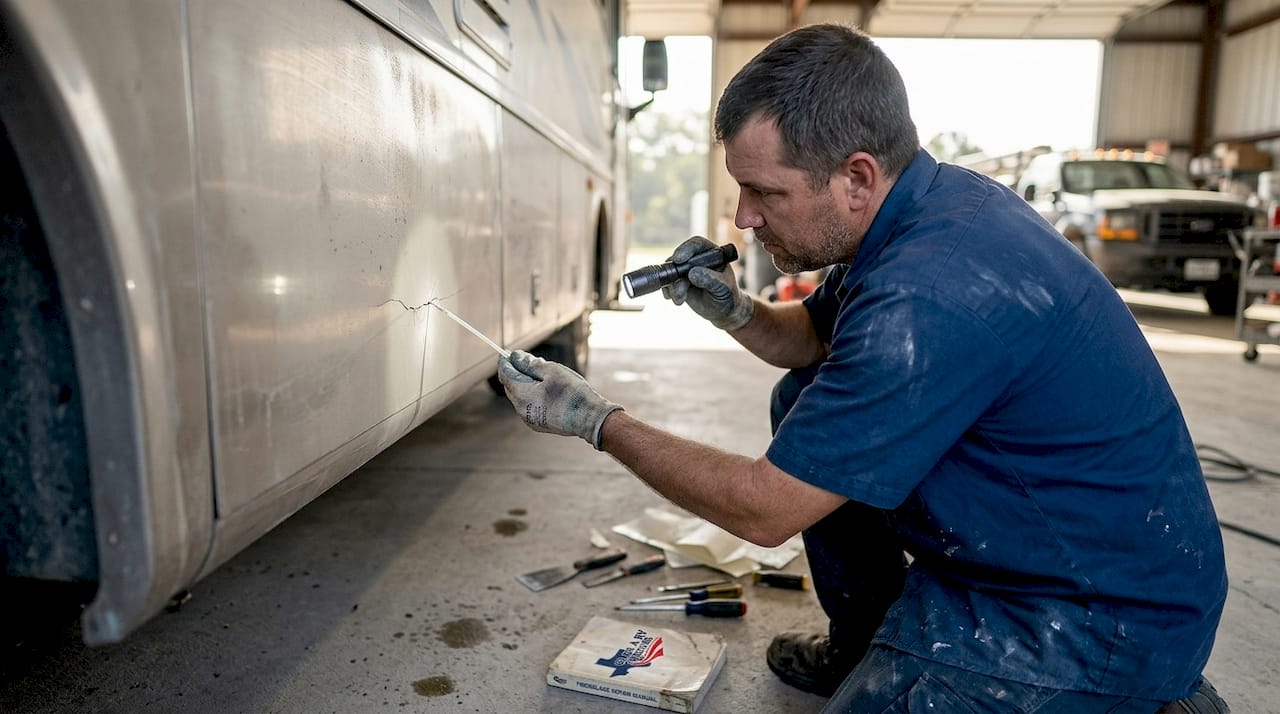
- Stress cracks. These are the sneaky ones. Stress cracks form from the constant flexing your RV experiences during travel. They often start as hairline fractures near corners, doors, or slide-out openings. Left alone, they widen with every trip.
Pro Tip: A stress crack that looks cosmetic today can become a water leak within one rainy season. Getting it assessed early keeps repair costs for hail or collisions from ballooning into a much larger project.
Experienced shops spot damage that isn’t obvious to the untrained eye. What looks like a surface crack on the outside may indicate delamination or moisture intrusion inside the wall cavity. If you’re tempted to patch it yourself first, read a DIY repair tutorial to understand what’s actually involved before deciding. Established shops like Class A RV Repairs are preferred for collision and hail repairs because of their specialized equipment and insurance handling capabilities.
What to look for in a Texas RV fiberglass repair shop
Not every shop that says it works on RVs is actually equipped for fiberglass collision and paint work. Here’s what separates the qualified providers from the rest.
- Dedicated RV paint booth. Color matching fiberglass requires a controlled environment. Dust, humidity, and temperature all affect the final result. A proper paint booth is non-negotiable.
- Insurance experience. Your shop should know how to document damage, submit estimates, and communicate directly with adjusters. This saves you significant time and stress.
- Broad repair portfolio. Ask to see before-and-after examples of fiberglass work similar to yours. A shop with a strong track record will have plenty to show.
- Clear timelines and communication. Service advisors should walk you through the repair plan, expected timeline, and any surprises that come up during the job.
Pro Tip: Always ask about the warranty on paint color match and structural repairs. A confident shop will stand behind its work in writing.
| Criteria | What to look for |
|---|---|
| Shop experience | Years in RV-specific repair, not just auto body |
| Insurance support | Direct insurer relationships, claim documentation |
| Facility features | Dedicated paint booth, large-vehicle bays |
| Reputation | Verified reviews, before-and-after portfolio |
Class A RV Repairs has been family-owned since 1993 with a dedicated facility and full insurance support. Their fiberglass repair experts and parts and body resources are built specifically for the scale and complexity of RV work.
The RV fiberglass repair and insurance claims process: what to expect
The repair process feels less stressful when you know what’s coming. Here’s a typical step-by-step breakdown for a fiberglass insurance claim.
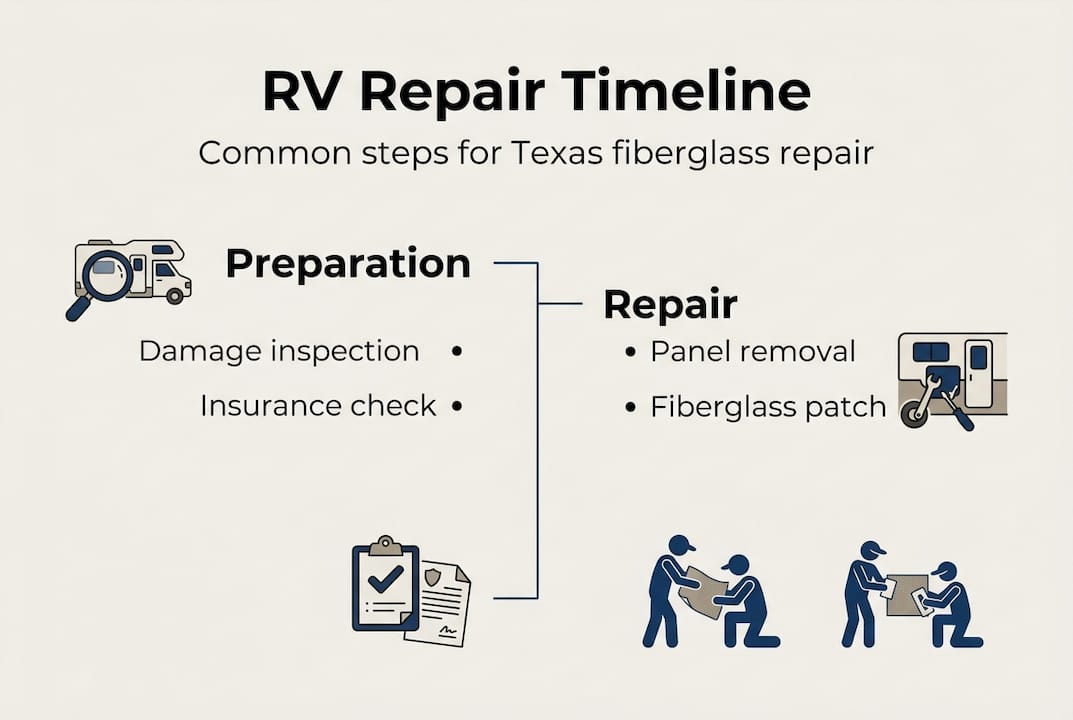
- Damage assessment and estimate. The shop inspects your RV, documents all damage with photos, and builds a detailed repair estimate.
- Insurer approval. The estimate goes to your insurance company. Shops with direct insurer relationships often get faster approvals.
- Parts ordering. Fiberglass panels, gel coat materials, and structural components are ordered. Lead times vary by RV make and model.
- Structural and fiberglass repair. Technicians address any underlying structural issues before the surface work begins.
- Paint and finish. The repaired panels are primed, painted, and clear-coated in a controlled booth environment.
- Quality check and delivery. The shop inspects the finished work and walks you through it before you take delivery.
| Repair type | Typical timeline |
|---|---|
| Single hail-damaged panel | 5 to 10 business days |
| Multi-panel hail claim | 2 to 3 weeks |
| Collision with structural damage | 3 to 5 weeks |
The best shops keep you updated at each stage, especially if hidden damage is found during the repair. Class A RV Repairs works directly with insurance for claims and provides full paint and body restoration, so you have one point of contact for the entire process. Their RV repair services cover everything from initial assessment through final delivery.
The truth most RV owners miss about fiberglass repairs
Here’s what we’ve seen over decades in this business: the owners who try to save money with a DIY patch or a cut-rate shop almost always spend more in the long run. A patch kit from a hardware store can seal the surface while moisture quietly works its way into the wall cavity. By the time you see bubbling or soft spots, the damage has spread well beyond the original crack.
Insurer approvals and repair warranties also depend on certified professional work. A repair that wasn’t done in a controlled environment or documented properly can void coverage on future related claims. Family-owned shops that specialize in RVs build long-term relationships with their clients, and that relationship has real financial value. The benefits of professional repair go far beyond cosmetics.
Ready to restore your RV? Contact Texas’s fiberglass experts
If your RV has taken hail hits, collision damage, or stress cracks that need professional attention, the next step is straightforward.
Class A RV Repairs handles fiberglass and paint repairs for motorhomes, travel trailers, and fifth wheels across Central Texas. As a family-owned business with decades of experience, we work directly with your insurer, manage the claim paperwork, and restore your RV to pre-damage condition. Browse our full RV service options or reach out directly to schedule an assessment and contact our experts today.
Frequently asked questions
How long does typical RV fiberglass repair take in Texas?
Most repairs range from 1 to 3 weeks, depending on damage severity, parts availability, and insurer approvals. Class A RV Repairs provides clear timelines for insurance claims and keeps you updated throughout.
Will insurance cover my RV fiberglass repair costs in Central Texas?
Insurance will often cover hail and collision damage, but coverage depends on your policy terms and using a shop recognized by your provider. Working with a shop that has direct insurer relationships simplifies the approval process significantly.
What is the risk of delaying fiberglass repairs on my RV?
Delaying repairs allows water to infiltrate the wall cavity, leading to rot, delamination, and structural damage that costs far more to fix. Even a small crack can become a major problem after one wet season.
What questions should I ask my RV repair shop before booking?
Ask about their experience with RV-specific fiberglass work, their insurance support process, what warranty they offer, and whether they have a dedicated paint booth. Established Texas shops with dedicated facilities and insurance support are your best starting point.
Recommended
- RV paint repair options in Central Texas: DIY vs. pro
- Fiberglass Rebuild – Class A RV Repairs
- RV insurance in Central Texas: Protect your investment
- Fiberglass Repair & Paint – Class A RV Repairs
Jean runs growth strategy at AimSetWin, a performance marketing agency specializing in local service businesses across Texas. he's helped plumbers, HVAC companies, pest control operators, and home service brands build predictable revenue systems using data-driven advertising and conversion optimization.


