

Learn how specialized RV body shops in Central Texas handle collision repair, fiberglass reconstruction, and hail damage for motorhomes and trailers with expert techniques.
When your motorhome’s fiberglass side panel cracks after a highway collision or your travel trailer develops hail dents from a Texas storm, many owners assume any auto body shop can handle the repair. That’s a costly mistake. Standard auto shops lack the oversized bays, heavy-duty lifts, and composite material expertise required for large recreational vehicles. Specialized RV body shops provide collision repair, fiberglass reconstruction, paint matching, and insurance claim support tailored specifically for motorhomes, travel trailers, and fifth wheels across Central Texas.
Table of Contents
- Key takeaways
- Why specialized RV body shops are essential for Central Texas RV owners
- Common repairs handled by RV body shops and their cost-saving techniques
- Unique challenges for RV body shops serving Central Texas and expert repair approaches
- How to choose the right RV body shop in Central Texas for your motorhome or trailer
- Explore top RV body repair services in Central Texas
- Frequently asked questions about RV body shops
Key Takeaways
| Point | Details |
|---|---|
| Specialized RV shops | General auto shops lack the oversized bays, heavy lifts, and composite material expertise needed for large RVs. |
| OEM parts access | Before choosing a shop, confirm they have relationships with major RV manufacturers to access OEM parts and ensure proper fit. |
| Insurance preference | Insurance providers recognize specialized RV body shops as preferred providers because they document repairs properly and coordinate with adjusters. |
| Long term savings | Investing in a higher quality fiberglass repair at a specialized shop can pay off with 10 to 15 years of service compared with 2 to 3 years for a basic patch. |
| Fiberglass repair process | Fiberglass reconstruction involves grinding to sound material, applying epoxy resin in layers, embedding fiberglass cloth, and gel coating with 3 to 7 days of curing between layers. |
Why specialized RV body shops are essential for Central Texas RV owners
General auto body shops simply can’t accommodate a 40-foot Class A motorhome or properly repair fiberglass sidewalls. Specialized RV body shops outperform general facilities because they maintain equipment designed for vehicles measuring 8-13 feet tall and weighing 10,000-30,000 pounds. Standard automotive lifts max out around 10,000 pounds, creating safety hazards when attempting to service heavy motorhomes.
Fiberglass and composite materials dominate RV construction, requiring completely different repair techniques than steel auto body panels. Technicians must understand resin layering, gel coat matching, and proper curing temperatures to prevent future delamination. Aluminum-sided trailers need specialized welding equipment and skills distinct from standard automotive metalwork. Without this expertise, repairs fail within months, exposing owners to water intrusion and structural rot.
Class A RV Repairs and similar specialized facilities maintain oversized service bays measuring 14-16 feet tall with 50-foot depth to maneuver large rigs safely. Heavy-duty lifts rated for 30,000+ pounds allow technicians to access undercarriage damage without risking vehicle stability. These shops stock RV-specific materials including gel coat in multiple colors, fiberglass cloth in various weights, and aluminum extrusions matching common RV manufacturers.
Pro Tip: Before selecting a shop, confirm they maintain relationships with major RV manufacturers for OEM parts access. Generic replacement panels often don’t match original specifications, creating gaps that leak water and compromise structural integrity.
Insurance companies recognize specialized RV body shops as preferred providers because these facilities document repairs properly and use manufacturer-approved methods. This distinction matters when filing collision or hail damage claims, as insurers may dispute repairs performed at non-specialized facilities. Shops experienced with parts and body repair processes coordinate directly with adjusters, expediting claim approvals and ensuring proper coverage.
The cost difference becomes apparent when comparing repair quality over time. A $3,000 fiberglass repair at a specialized shop lasts 10-15 years, while a $1,800 patch job at a general auto shop often fails within 2-3 years, requiring complete re-repair at double the original cost. Central Texas heat and humidity accelerate improper repairs, making initial quality investment critical for long-term value.
Common repairs handled by RV body shops and their cost-saving techniques
Fiberglass reconstruction involves resin layering and reinforcement with multiple cloth weights to restore structural integrity after collision damage. Technicians grind damaged areas to sound material, apply epoxy resin in thin coats, embed fiberglass cloth between layers, and finish with gel coat color-matched to surrounding surfaces. This process typically requires 3-7 days for proper curing between layers, preventing future cracking or delamination.
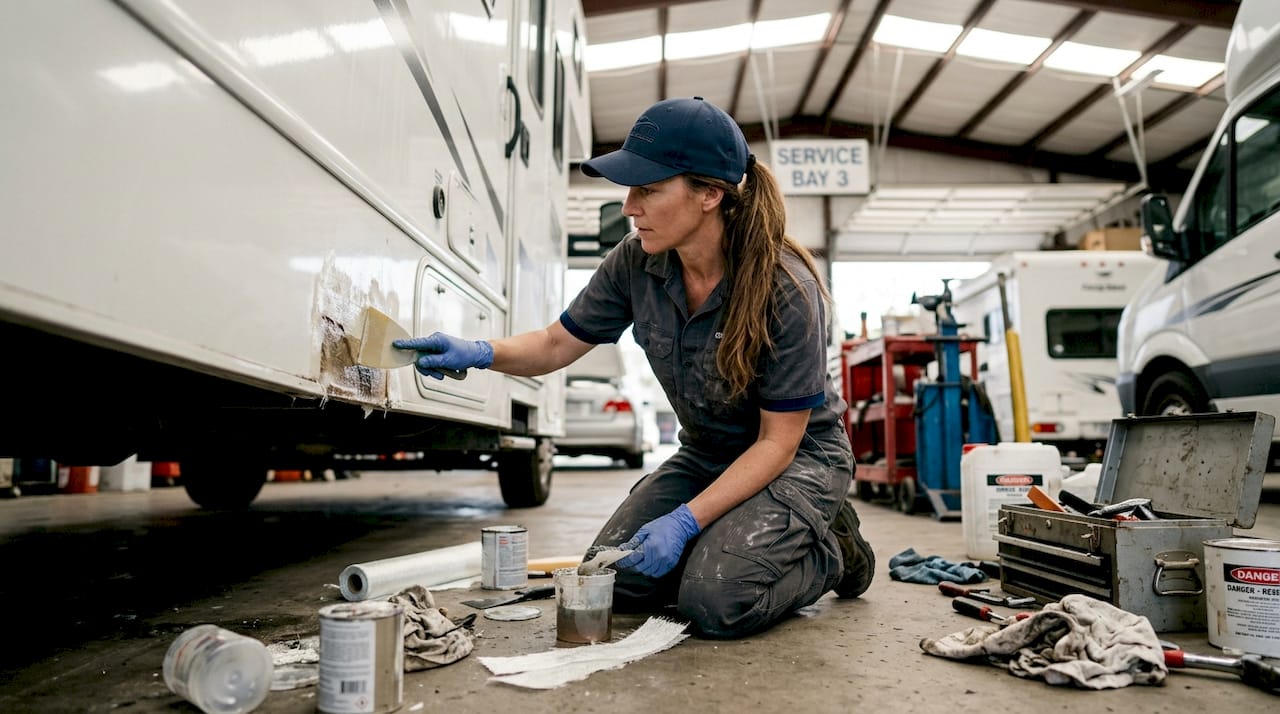
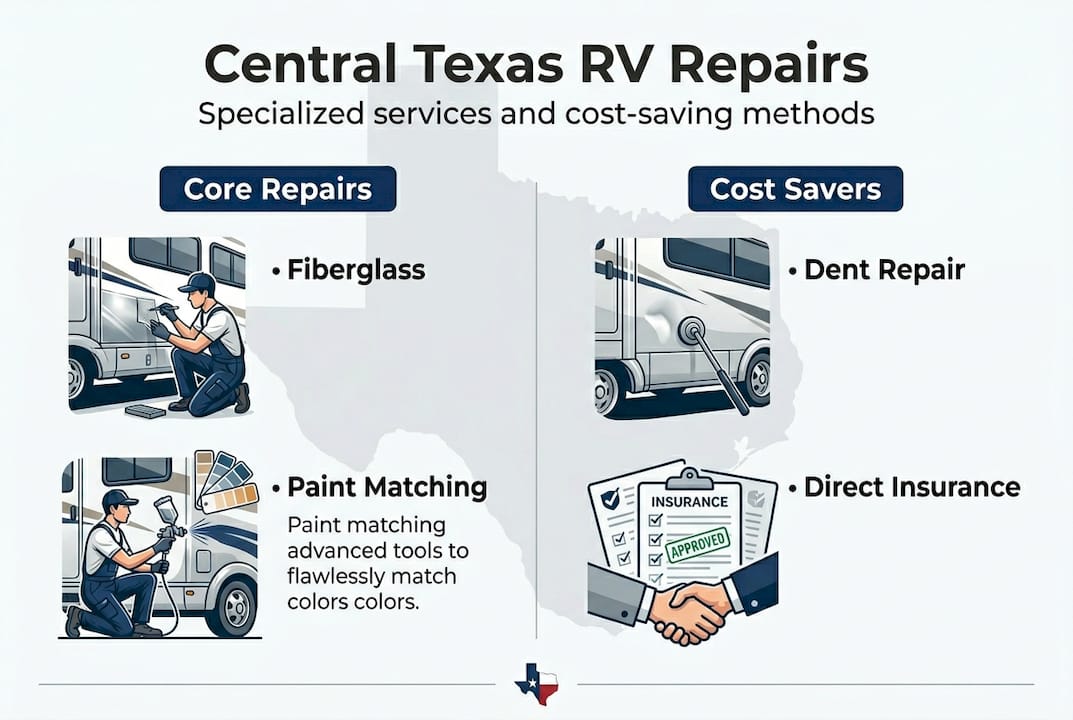
Paint matching presents unique challenges for RVs because manufacturers use specialized automotive-grade paints that fade differently than standard car finishes. Body shops must blend colors across large panels, sometimes requiring full-side repaints to avoid visible mismatches. Modern computerized color matching systems analyze existing paint and create custom formulas, but skilled technicians still hand-blend final coats for seamless results.
Paintless dent repair costs 50-70% less than traditional methods, making it ideal for Texas hail damage affecting aluminum-sided trailers and motorhomes. Technicians use specialized tools to massage dents from behind panels without disturbing paint, preserving original factory finish. This technique works best for shallow dents smaller than a golf ball without paint damage, completing repairs in 1-3 days versus 1-2 weeks for conventional methods.
Collision repair encompasses frame straightening, panel replacement, and structural reinforcement after accidents. Class A motorhomes often suffer chassis damage requiring specialized alignment equipment and welding expertise. Travel trailers may need complete wall panel replacement when impact compromises internal framing, involving removal of interior cabinets and systems for proper access.
Pro Tip: Request detailed photo documentation before and during repairs, especially for insurance claims. This evidence protects you if disputes arise about repair scope or quality, and helps justify costs to adjusters unfamiliar with RV-specific repair requirements.
| Repair Type | Cost Range | Timeline | Best Method |
|---|---|---|---|
| Minor fiberglass crack | $500-1,200 | 2-3 days | Epoxy injection with gel coat |
| Large panel damage | $1,500-4,000 | 5-7 days | Full fiberglass reconstruction |
| Aluminum dent (PDR) | $300-800 | 1-2 days | Paintless dent repair |
| Aluminum panel replacement | $1,200-2,500 | 3-5 days | Welded panel with paint match |
| Major collision (Class A) | $15,000-35,000 | 3-8 weeks | Frame straightening, panel replacement |
DIY epoxy injection kits cost $50-150 and work for small fiberglass cracks under 6 inches, but professional repairs ensure proper reinforcement preventing crack expansion. Owners can handle minor cosmetic fixes, but structural damage requires certified technicians with composite material expertise. The line between cosmetic and structural isn’t always obvious, so consultation with experienced shops like those offering fiberglass repair and paint services helps determine appropriate repair approaches.
Unique challenges for RV body shops serving Central Texas and expert repair approaches
Texas hail storms strike Central Texas 15-25 times annually, creating consistent demand for cost-effective dent repair without compromising vehicle value. Hail damage requires PDR for shallow dents, panel replacement for deep impacts that crack paint, and roof resealing after severe storms that compromise rubber membrane integrity. Insurance companies prefer PDR because it maintains original factory finish, preserving resale value better than repainted panels.
Water intrusion causes delamination when moisture penetrates sidewalls through failed sealant or damaged panels, separating exterior fiberglass from interior luan backing. Delamination threatens structural integrity if untreated, allowing rot to spread through wall framing and floor systems. Early-stage delamination responds to epoxy injection through small drilled holes, costing $800-2,000 per affected area. Advanced cases require complete wall panel removal and reconstruction, running $5,000-15,000 depending on damage extent.
Structural frame and chassis damage from collisions demands specialized alignment equipment and welding certification for RV-specific materials. Motorhome chassis use different steel grades than automotive frames, requiring proper welding procedures to maintain structural ratings. Travel trailer frames often incorporate aluminum components needing TIG welding expertise, not standard MIG welding used for steel auto frames.
Preventive roof resealing every 3-5 years costs $800-1,500 but prevents water damage repairs costing 10-20 times more. Central Texas heat accelerates sealant degradation, making regular maintenance critical for avoiding delamination. Shops offering rear cap fiberglass repair typically include roof inspection as standard practice, identifying potential leak points before water intrusion occurs.
| Damage Type | Repair Method | Cost Range | Timeline | When Appropriate |
|---|---|---|---|---|
| Shallow hail dents | Paintless dent repair | $2,000-6,000 | 3-7 days | Dents under 1 inch, no paint damage |
| Deep hail impacts | Panel replacement + paint | $8,000-18,000 | 2-4 weeks | Paint cracking, metal creasing |
| Early delamination | Epoxy injection | $800-2,500 | 2-3 days | Soft spots under 12 inches |
| Advanced delamination | Wall reconstruction | $5,000-15,000 | 1-3 weeks | Visible separation, widespread softness |
| Frame damage | Alignment + welding | $3,000-12,000 | 1-2 weeks | Post-collision, handling issues |
Central Texas humidity combined with temperature swings from 30°F winter nights to 105°F summer days stresses RV materials more than moderate climates. Fiberglass expands and contracts at different rates than aluminum framing, creating stress points where panels attach to structure. Professional repairs account for these thermal dynamics by using flexible sealants and proper fastener spacing, preventing future cracking that DIY repairs often miss.
How to choose the right RV body shop in Central Texas for your motorhome or trailer
Verify the shop specializes exclusively in RV body repairs rather than offering RV service as a sideline to automotive work. Facilities designed for RVs maintain bay doors measuring 14+ feet tall and 12+ feet wide, with clear floor space extending 50+ feet to maneuver large motorhomes safely. Ask about the largest RV they’ve serviced recently. Shops regularly handling 40-foot Class A motorhomes possess equipment and expertise for any smaller RV.
Check whether technicians hold certifications from RV manufacturers or industry organizations like RVIA (RV Industry Association). Certified technicians complete specialized training in fiberglass repair, aluminum welding, and RV-specific systems, ensuring repairs meet manufacturer standards. Request examples of similar repairs to your damage type, reviewing photo documentation of their process and finished results.
Recommended Central Texas shops include Class A RV Repairs, Auer’s RV, and Elite RV Roof & Collision, all maintaining full collision and body service capabilities with insurance company relationships. These facilities stock common RV parts on-site, reducing repair timelines from weeks to days by eliminating parts ordering delays. On-site parts inventory particularly matters for older RVs where manufacturers may have discontinued specific components.
Pro Tip: Visit the facility before committing to repairs. Observe whether they’re actively working on RVs similar to yours, check for organized work areas indicating professional operations, and ask about their typical repair timeline. Shops that rush estimates or can’t explain their repair process in detail often deliver substandard results.
Prioritize shops accepting insurance and offering direct billing, which streamlines claims by having the shop negotiate directly with adjusters rather than requiring you to pay upfront and seek reimbursement. Shops tied with insurance companies understand documentation requirements and proper repair protocols that satisfy insurer standards, reducing claim disputes and ensuring full coverage.
Consider customer reviews from the Central Texas RV community through forums, Facebook groups, and Google reviews. Pay attention to comments about repair quality six months or a year after service, as proper repairs reveal their quality over time. Ask specifically about experience with your RV type, whether motorhome, travel trailer, or fifth wheel, since each presents unique repair challenges requiring different expertise and equipment.
Request detailed written estimates breaking down labor, materials, and timeline before authorizing work. Legitimate shops provide transparent pricing and explain each repair step, while questionable operators offer vague estimates or pressure immediate decisions. Compare estimates from 2-3 specialized shops to understand fair market pricing, but remember the lowest bid often indicates cut corners or inexperienced technicians.
Explore top RV body repair services in Central Texas
When your RV needs professional collision repair, fiberglass reconstruction, or hail damage service, partnering with experienced specialists ensures quality results that last. Class A RV Repairs maintains a purpose-built facility designed specifically for large recreational vehicles, offering comprehensive body repair services backed by manufacturer-grade materials and certified technicians.
Explore their full range of RV repair services including collision repair, paint matching, and structural reconstruction. Review their collision repair portfolio showcasing completed projects from minor fiberglass fixes to major accident reconstruction. Their parts and body repair capabilities include on-site parts inventory and direct insurance billing, streamlining your repair experience from initial estimate through final delivery.
Frequently asked questions about RV body shops
What services do RV body shops provide beyond collision repair?
RV body shops handle fiberglass reconstruction, paint matching, hail damage repair using paintless dent repair, delamination treatment, roof resealing, and aluminum panel welding. Many also offer preventive maintenance like sealant inspection and minor cosmetic repairs.
How long do typical RV body repairs take in Central Texas?
Minor fiberglass repairs complete in 2-3 days, paintless dent repair takes 3-7 days for hail damage, and major collision reconstruction requires 3-8 weeks depending on parts availability and damage extent. Shops with on-site parts inventory significantly reduce timelines.
Can I repair minor RV fiberglass damage myself?
Small cracks under 6 inches respond well to DIY epoxy injection kits costing $50-150, but structural damage requires professional expertise to prevent future failure. Consult with experienced technicians to determine whether damage is purely cosmetic or affects structural integrity.
Do RV body shops work directly with insurance companies?
Reputable RV body shops maintain relationships with major insurance carriers, offering direct billing and handling adjuster negotiations. This arrangement streamlines claims, ensures proper documentation, and typically results in fuller coverage compared to owner-managed claims.
Why does RV body repair cost more than automotive body work?
RV repairs involve specialized materials like fiberglass and gel coat, require larger equipment and facilities, demand expertise in composite materials, and often include structural components affecting habitability. Labor rates reflect specialized training and equipment investment necessary for quality RV repairs.
How do I prevent future RV body damage in Central Texas?
Schedule roof resealing every 3-5 years, inspect sealant around windows and doors annually, store your RV under cover when possible to minimize hail exposure, and address minor damage immediately before water intrusion causes delamination. Regular preventive maintenance costs far less than major repairs.
Recommended
- RV Repair, Collision Repair & RV Paint Shop | Class A RV Repairs
- RV Repair, Collision Repair & RV Paint Shop | Class A RV Repairs
- RV Repair, Collision Repair & RV Paint Shop | Class A RV Repairs
- RVs for Sale | Motorhomes, Travel Trailers & Fifth Wheels
Jean runs growth strategy at AimSetWin, a performance marketing agency specializing in local service businesses across Texas. he's helped plumbers, HVAC companies, pest control operators, and home service brands build predictable revenue systems using data-driven advertising and conversion optimization.


