

Discover the must-have RV parts list for Central Texas owners! Ensure safe travels and avoid breakdowns with essential components and tools.
TL;DR:
- An essential RV parts list includes electrical protectors, tire safety gear, plumbing replacements, and emergency equipment to prevent breakdowns during Texas Hill Country trips. Proper maintenance of these systems, combined with professional repairs when needed, ensures safety and longevity on remote roads. Tailoring your parts kit to your RV’s specific systems and travel routes maximizes reliability and prepares you for unexpected issues.
A must-have RV parts list is the collection of essential components, tools, and safety supplies every RV owner needs to travel safely, handle roadside problems, and protect their investment on the road. For owners traveling Texas Hill Country routes near Kerrville, Boerne, and San Antonio, the stakes are higher. Remote stretches, summer heat, and rough caliche roads put real stress on every system in your rig. Knowing which parts to carry before you leave the driveway separates a minor inconvenience from a trip-ending breakdown. This RV parts checklist covers the four systems most likely to fail and the gear that keeps you moving.
1. Which electrical parts are essential for every RV owner?
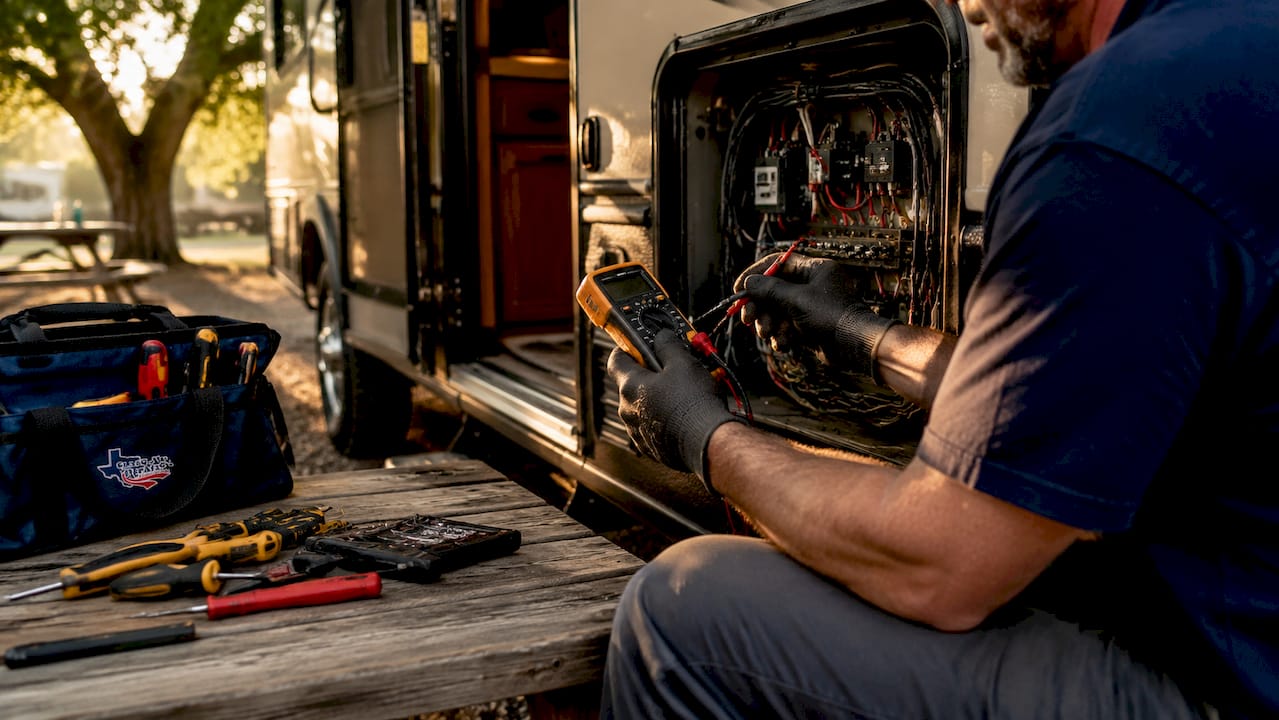
Electrical failures are among the most expensive surprises in RV ownership. A single voltage spike at a campground pedestal can destroy your air conditioner, refrigerator, and converter in seconds. Smart surge protectors prevent appliance damage from voltage fluctuations and miswired pedestals, making them the single most cost-effective purchase on any RV accessories list.
- Surge protector or EMS device: Choose a 30-amp or 50-amp model to match your rig’s service. A full EMS (Electrical Management System) goes further than a basic surge protector by also monitoring voltage levels and disconnecting automatically when power falls outside safe range.
- Digital multimeter: The Fluke 101 offers essential electrical diagnostics without complexity, letting owners identify flickering lights or appliance failures before they become serious.
- Voltage tester: A non-contact tester checks outlets and wiring quickly without disassembly.
- Replacement fuses and breakers: Carry a mixed fuse kit matched to your RV’s fuse panel. A blown fuse at mile marker 40 on Ranch Road 337 is not the time to improvise.
Pro Tip: Never attempt to repair RV wiring, inverters, or converter boards yourself. Miswired 120V circuits inside an RV can cause fires inside walls where they are nearly impossible to detect. A professional inspection at a shop like Class A RV Repairs costs far less than replacing a burned-out electrical system.
2. What tire and roadside safety parts should RV owners carry?
Tire failure is the most common roadside emergency for RV owners, and it is especially dangerous on the two-lane highways that wind through the Texas Hill Country. Portable air compressors capable of 80 to 110 PSI, paired with a tire plug kit, allow durable on-road repairs rather than just temporary fixes.
- Digital tire pressure gauge: Check all tires cold before every departure. Underinflated tires on a loaded Class A motorhome generate heat fast, especially in Texas summer temperatures.
- TPMS (Tire Pressure Monitoring System): A wireless TPMS alerts you in real time to pressure loss or heat spikes while driving. This is the difference between pulling over safely and a blowout at highway speed.
- Heavy-duty wheel chocks: Rubber chocks prevent roll on uneven Hill Country terrain. Plastic versions crack in heat. Buy rubber.
- Leveling blocks: Camco Fasten leveling blocks stack and lock, preventing the shifting that causes slide-out alignment problems over time.
- Tire plug kit: A quality plug kit with CO2 cartridges handles most punctures from road debris without requiring a full tire change.
- Roadside visibility kit: LED flares, reflective triangles, and a hi-vis vest are required gear for any breakdown on a Texas state highway.
Pro Tip: Maintaining correct tire pressure extends tire life and protects your suspension, wheel wells, and slide-out mechanisms. A single blowout on a loaded motorhome can cause body damage that costs thousands to repair. Preventing it costs about $30 in tools.
3. Essential plumbing and waste management parts
Plumbing problems are the most unpleasant failures in RV travel and often the most avoidable. Carrying the right parts keeps your freshwater system clean and your black tank functional through a full trip.
- Drinking water-safe hose and pressure regulator: A white NSF-certified hose paired with a 40 to 45 PSI regulator protects your water lines from campground pressure spikes. Standard garden hoses leach chemicals into drinking water.
- Sewer hose kit with support: A four-inch diameter hose with a rigid support system prevents sagging and backflow. Carry a spare bayonet fitting and end cap.
- Black tank treatment: Enzyme-based treatments like Walex Bio-Pak break down waste and control odor without harming tank sensors.
- Mechanical tank rinser: Camco Rhino Blaster clears severe black tank clogs by backflushing from the outlet side. Chemical treatments alone cannot break up the solid pyramid plugs that form when tanks are not flushed regularly.
- Sewer gate valve and cap: A replacement gate valve takes ten minutes to swap and prevents a sewage leak that can damage your underbelly insulation and subfloor.
Pro Tip: If you notice slow draining, gurgling, or persistent odors that don’t respond to treatment, that is a sign of a mechanical problem, not just a chemical one. Professional diagnosis prevents the kind of subfloor water damage that turns a $200 plumbing fix into a $3,000 structural repair.
4. What emergency and safety equipment must every RV carry?
Emergency preparedness for RV travel means carrying gear that addresses both life safety and mechanical failure. These are the items that matter when you are 30 miles from the nearest town in Bandera County.
- Fire extinguisher: Carry a 2.5 lb ABC dry chemical extinguisher rated for Class A, B, and C fires. Mount it within reach of the kitchen and the engine bay.
- Smoke, CO, and propane alarms: Alarms placed near sleeping areas and the kitchen provide timely alerts to fire and gas leaks. Test them monthly. Replace batteries every six months.
- Trauma-level first aid kit: Advanced kits with tourniquets and hemostatic gauze address life-threatening injuries during remote travel, going well beyond basic bandages.
- Ratcheting screwdriver with magnetic tip: Multipurpose ratcheting screwdrivers save time and prevent lost screws in tight RV compartments where standard tools don’t fit.
- Duct tape and self-fusing silicone tape: Silicone tape creates a waterproof seal on hoses and pipes without adhesive residue. Duct tape handles everything else temporarily.
- Breaker bar with correct socket: For manual slide-out overrides, a breaker bar with the correct socket protects the gear mechanism far better than the flimsy tool included with most rigs.
Pro Tip: Stage your emergency gear in two separate locations: roadside safety items in an exterior compartment you can reach without entering the RV, and interior emergency supplies in a fixed cabinet near the door. Mixing everything together means digging through camping gear when seconds count.
Key takeaways
A systems-based approach to your RV parts checklist, covering electrical, tires, plumbing, and emergency gear, is the most reliable way to prevent breakdowns and protect your rig on Central Texas roads.
| Point | Details |
|---|---|
| Electrical protection first | A 30-amp or 50-amp EMS device is the highest-return purchase on any RV parts list. |
| Tire safety saves money | Correct tire pressure and a TPMS prevent blowouts that cause expensive body and suspension damage. |
| Plumbing parts prevent structural damage | A spare gate valve and tank rinser stop small plumbing failures from becoming subfloor repairs. |
| Stage emergency gear separately | Keep roadside safety items in an exterior compartment for fast access during a breakdown. |
| Professional service beats DIY for systems | Electrical, plumbing, and slide-out repairs done professionally prevent compounding damage and support insurance claims. |
What I’ve learned after years of seeing what fails on Texas roads
I’ve seen the same pattern repeat itself at Class A RV Repairs more times than I can count. An owner spends $80,000 on a motorhome and then skips the $45 surge protector. Or they carry a basic first aid kit but no tire pressure gauge. The parts that get skipped are almost always the ones that seem unlikely to be needed until they are urgently needed.
The other thing I’d push back on is the idea of a universal parts list. Your 40-foot diesel pusher has different failure points than a 24-foot travel trailer. A tailored, systems-based kit that targets your specific rig’s weak spots is worth more than any generic pre-packaged solution. If you travel the Hill Country regularly, add a high-capacity air compressor and extra water filtration. The roads and the heat demand it.
The last thing I’ll say: know where your limits are. Carrying a multimeter is smart. Rewiring your converter because a YouTube video made it look easy is how rigs end up in our shop with far more damage than the original problem caused. Use your parts list to stabilize a situation and get to professional help. That’s what it’s for.
— Jean
Keep your RV road-ready with Class A RV Repairs
When your parts list isn’t enough and a system needs professional attention, Class A RV Repairs in Pipe Creek, TX handles the full range of RV repairs for motorhomes, travel trailers, and fifth wheels across Central Texas. From electrical diagnostics and slide-out repairs to collision work and insurance claims, the shop’s purpose-built facility keeps parts on-site for faster turnaround. Owners traveling from San Antonio, Boerne, Kerrville, and the Hill Country rely on the team for both preventative maintenance and emergency repairs. Explore the full range of RV repair services or schedule your service today before your next trip.
FAQ
What is the most important item on an RV parts list?
A surge protector or EMS device is the single highest-priority item because one voltage spike can destroy multiple expensive appliances simultaneously. Choose a model rated for your rig’s amperage, either 30-amp or 50-amp.
How often should I check my RV’s tire pressure?
Check tire pressure cold before every trip departure. A TPMS provides continuous monitoring while driving and alerts you to dangerous pressure drops before a blowout occurs.
Can I fix RV plumbing problems myself?
Minor issues like replacing a sewer cap or swapping a gate valve are manageable with the right parts on hand. Persistent leaks, slow drains, or subfloor moisture require professional diagnosis to prevent structural damage.
What emergency supplies should every RV carry?
Every RV needs a fire extinguisher, smoke and CO alarms, a trauma-level first aid kit, roadside visibility gear, and a tire plug kit. Organize these in two staged locations for fast access.
How do I build a parts list for my specific RV?
Start with the four core systems: electrical, tires, plumbing, and emergency gear. Then review your RV systems checklist and add parts specific to your rig’s age, type, and the routes you travel most often in Texas.
Recommended
- Essential RV parts replacement guide: Central Texas owners
- Essential RV repair tools: must-haves for Central Texas owners
Jean runs growth strategy at AimSetWin, a performance marketing agency specializing in local service businesses across Texas. he's helped plumbers, HVAC companies, pest control operators, and home service brands build predictable revenue systems using data-driven advertising and conversion optimization.


