

Discover the 12 essential RV repair tools every Central Texas owner needs to handle roadside emergencies and campground maintenance with confidence.
Picture this: you’re 40 miles outside Fredericksburg on a hot July afternoon, your RV has a flat, and the nearest service center is an hour away. That moment of panic is exactly what the right toolkit prevents. Central Texas roads, from the Hill Country’s winding two-lanes to the long stretches of I-10, put real stress on your rig. This guide walks you through how to choose the right tools, which 12 items belong in every RV, and how to organize your kit so you’re ready for whatever Texas throws at you.
Table of Contents
- How to choose RV repair tools for Texas roads
- The 12 essential tools every RV owner needs
- Comparison: Off-the-shelf tool kits vs. building your own
- Situational picks: Tools for road emergencies vs. campground repairs
- Caring for your tools: Storage, maintenance, and upgrades
- When to call the pros: Support beyond your toolbox
- Frequently asked questions
Key Takeaways
| Point | Details |
|---|---|
| Essentials matter | Having a well-chosen toolkit prevents travel delays and costly breakdowns. |
| Custom kits win | Building your tool kit over time lets you match your repair needs and RV style. |
| Storage counts | Proper care and storage extend tool life and keep your repairs efficient. |
| Know your limits | DIY tools handle basics, but major repairs call for expert help. |
How to choose RV repair tools for Texas roads
Not every tool that works for a weekend mechanic in Ohio makes sense for an RV owner rolling through the Texas Hill Country in August. The heat alone changes everything. Rubber seals crack faster, electrical connections corrode quicker, and tires lose pressure more unpredictably when temperatures push past 100°F. RV tool selection should focus on climate, road conditions, and the most common repairs you’ll actually face.
The most frequent problems Central Texas RV owners deal with include tire blowouts, water leaks around windows and roof seams, electrical failures, and AC system issues. Your toolkit should address all four categories. Beyond that, every tool you carry needs to be portable enough to store in a tight compartment and durable enough to survive the heat inside a parked RV.
Here’s what to prioritize when selecting tools for this region:
- Climate compatibility: Choose tools with rubber grips that won’t melt or crack in high heat
- Portability: Compact, lightweight options that fit in a standard RV storage bay
- Durability: Stainless steel or chrome-vanadium tools resist humidity-related rust
- Compatibility: Make sure socket sizes and fittings match your specific RV model
- Legal roadside use: Stick to tools that let you make safe, legal fixes without specialized licenses
A solid maintenance checklist paired with the right tools is your best defense against costly breakdowns. If you’re newer to RV ownership, the motorhome repair guide is a great place to understand what repairs you can realistically handle yourself.
The 12 essential tools every RV owner needs
With clear criteria in mind, you can now build a toolkit based on the essentials for your RV. These aren’t luxury items. They’re the tools that get you back on the road or keep a small problem from becoming a big one. Having the right tools can prevent up to a quarter of RV breakdowns before they strand you.
- Socket and wrench set: Handles chassis bolts, hitch fittings, and mechanical connections throughout your rig
- Digital tire pressure gauge: Accurate readings matter more in Texas heat where pressure fluctuates constantly
- Portable air compressor: Refill a low tire on the spot without waiting for roadside assistance
- Multimeter: Diagnoses battery issues, shore power problems, and faulty wiring fast
- Wire crimper and stripper: Essential for fixing or replacing electrical connections cleanly
- Screwdriver set: Flat, Phillips, and square drive covers nearly every panel and fixture in your RV
- Heavy-duty pliers and adjustable wrench: Tackles plumbing fittings, clamps, and stubborn fasteners
- Duct tape, electrical tape, and sealant: Temporary fixes that hold until you reach a service center
- Rubber mallet: Seats connections and adjusts slide-outs without damaging surfaces
- Leveling blocks: Critical for stabilizing your rig on uneven Texas campground terrain
- Utility knife: Cuts sealant, rope, strapping, and a dozen other materials on the fly
- Work gloves and safety goggles: Protect your hands and eyes during any repair, no exceptions
Pro Tip: Add a cordless drill to your kit. It speeds up jack adjustments, panel removal, and dozens of small repairs that would otherwise eat up your afternoon.
For a deeper look at what goes wrong most often, check out common RV repairs and how to avoid them. If you’re sourcing replacement parts, the RV parts replacement guide covers what to keep on hand.
Comparison: Off-the-shelf tool kits vs. building your own
Once you have a list of must-have tools, your next decision is whether to buy a ready-made kit or assemble your own. Both approaches have real merit, and the right answer depends on your budget, experience level, and how specific your RV’s needs are.
| Factor | Pre-assembled kit | Custom-built kit |
|---|---|---|
| Upfront cost | Lower, often bundled pricing | Higher, but you control quality |
| Convenience | Ready to use immediately | Requires research and time |
| Specialty tools | Often missing RV-specific items | You choose exactly what fits |
| Quality control | Varies widely by brand | You pick each tool’s quality |
| Upgradability | Limited by kit design | Easy to swap or add tools |
Pre-assembled kits are a solid starting point, especially if you’re new to RV ownership. The problem is that most are designed for general automotive use and skip the RV-specific tools you actually need, like a fin comb for your AC unit or leveling blocks for uneven sites.
Building your own kit takes more effort upfront, but most RV owners benefit from customizing their toolkit over time as they learn their rig’s quirks. Here’s what to check if you do buy a store-bought kit:
- Verify it includes a multimeter, not just basic hand tools
- Check that socket sizes cover both metric and standard measurements
- Confirm the sealant and tape included are rated for outdoor, high-heat use
- Look for a carrying case that fits your RV’s storage compartment dimensions
For guidance on parts replacement strategies that complement your toolkit, that resource breaks down what to stock by RV system.
Situational picks: Tools for road emergencies vs. campground repairs
With the main choices compared, it’s crucial to tailor your selection toward where and how you travel most in Central Texas. A tool that’s perfect for a campground repair might be too bulky to grab fast during a roadside emergency. Knowing the difference saves time and stress.
Campground toolkit needs differ significantly from those required for roadside fixes. Here’s a quick breakdown:
| Situation | Essential tools |
|---|---|
| Roadside emergency | Tire repair kit, reflective triangles, jumper cables, portable compressor, gloves |
| Campground maintenance | Caulk gun, AC fin comb, extra fuses, screwdriver set, sealant |
| Both scenarios | Multimeter, utility knife, duct tape, adjustable wrench |
For roadside emergencies, speed is everything. You want tools you can grab in under a minute. Reflective triangles are legally required in many situations and protect you while you work. Jumper cables handle dead batteries, which are surprisingly common after extended AC use in Texas heat.
At the campground, you have more time and space to work. That’s where a caulk gun earns its place, sealing roof seams before a leak becomes a water damage problem. An AC fin comb straightens bent condenser fins and restores cooling efficiency without a service call. Keep an eye on warning signs of major repairs so you know when a campground fix is enough and when it isn’t.
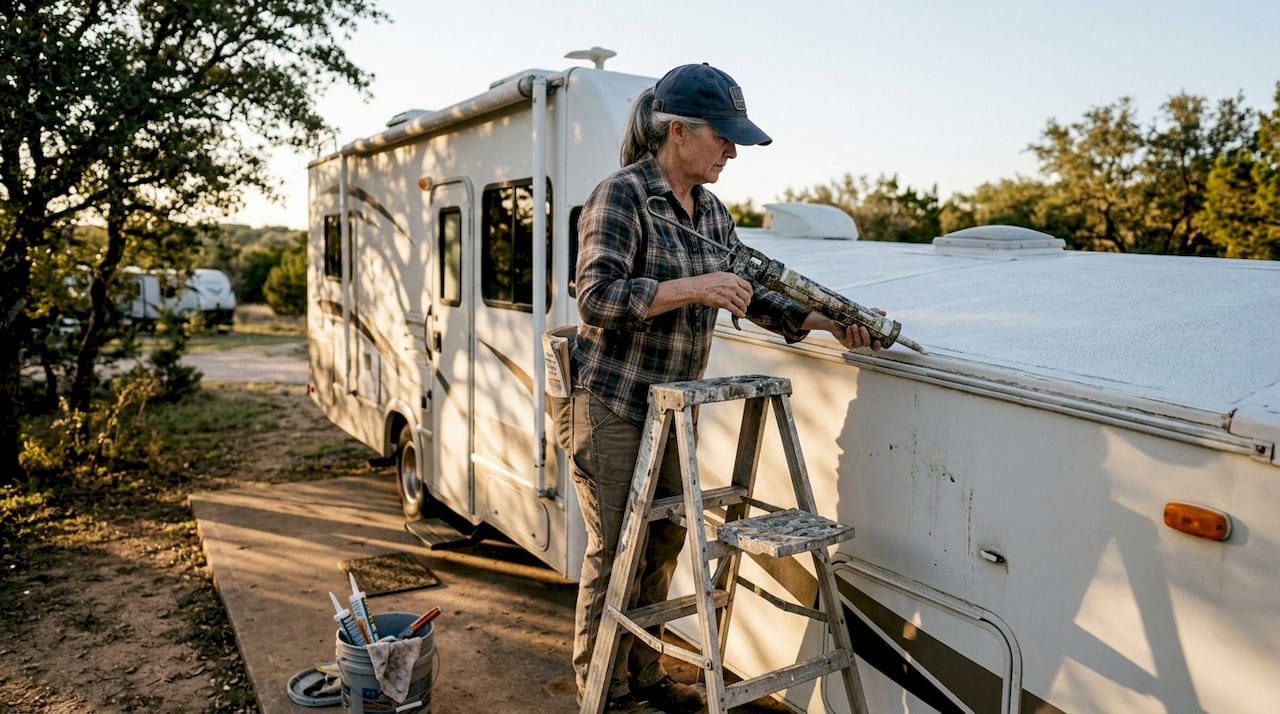
For owners with slide-outs, slide-out repair tips cover the specific tools and techniques that apply to those systems.
Pro Tip: Pack a dedicated grab-and-go bag with your emergency tools only. Keep it near the door, not buried in a storage bay. When something goes wrong on the road, you’ll be glad you did.
Caring for your tools: Storage, maintenance, and upgrades
No matter how good your tools are, how you care for them determines their reliability and value. A corroded wrench or a cracked screwdriver handle can fail at the worst possible moment. Texas humidity, especially in the Hill Country after rain, accelerates rust and degrades rubber grips faster than you’d expect.
Routine maintenance extends tool lifespan and reduces overall repair costs over time. Here’s how to keep your kit in shape:
- Store tools in a sealed, moisture-resistant case to block humidity from reaching metal surfaces
- Apply a light coat of machine oil to metal tools every few months, especially after wet weather
- Use silica gel packets inside your tool case to absorb moisture during storage
- Inspect handles and grips for cracking or looseness before every trip
- Label your tools so you can quickly spot if something is missing after a repair
Annual tool inspection is one of the simplest habits that separates prepared RV owners from stranded ones. A 20-minute check every six months catches worn tools before they fail on the road, saving you both time and money.
Beyond maintenance, plan to upgrade your kit as your RV ages. Older rigs develop new quirks, and your tools should evolve with them. If you’re dealing with body or exterior issues, RV body service tips can point you toward the right tools and techniques for surface repairs.
When to call the pros: Support beyond your toolbox
Even the best-equipped DIYer hits a wall sometimes. A well-stocked toolkit handles the majority of minor repairs, but certain jobs require professional equipment, specialized training, and the kind of parts inventory that only a dedicated facility carries.
At Class A RV Repairs, we work with Central Texas RV owners every day who’ve done everything right with their tools and still need expert support for collision damage, frame issues, or complex electrical failures. Our purpose-built facility handles motorhomes, travel trailers, and fifth wheels, and we keep a robust parts inventory on-site to cut your wait time. We also work directly with insurance companies to simplify claims. Whether you need a quick inspection or a full repair, full-service RV repairs are available for exactly those moments when your toolbox isn’t enough. Start with our complete maintenance checklist to stay ahead of problems before they become emergencies.
Frequently asked questions
What tools should every RV owner carry?
Every RV owner should carry a socket set, digital tire gauge, screwdrivers, pliers, utility knife, tape, and a multimeter. This core tool list covers the most common repairs you’ll face on the road.
How often should I inspect and replace my RV tools?
Inspect your tools every six months and replace them if you spot rust, wear, or damage. Routine tool checks prevent failures at the worst possible time.
What’s the difference between an RV tool kit and a regular auto tool kit?
An RV tool kit includes specialized tools for plumbing, electrical, and leveling not found in standard auto kits. The differences between kits come down to the unique systems built into recreational vehicles.
What emergency tools help most with roadside breakdowns?
A digital tire gauge, portable compressor, and jumper cables are essential for most roadside RV emergencies. These key emergency tools address the most common breakdown scenarios in Central Texas.
Can I manage most RV repairs myself?
You can handle many minor repairs with the right tools, but complex issues need professional support. For anything beyond basic fixes, professional RV services ensure the job is done safely and correctly.
Recommended
- Essential RV maintenance checklist for Central Texas owners
- RV service centers in Texas: what owners need to know
- How to schedule RV service in Central Texas (2026 guide)
- RV body shop services for Central Texas RV owners
- How Engineers Determine Repairs – What Texas Owners Need – Texas Licensed Engineers
Jean runs growth strategy at AimSetWin, a performance marketing agency specializing in local service businesses across Texas. he's helped plumbers, HVAC companies, pest control operators, and home service brands build predictable revenue systems using data-driven advertising and conversion optimization.


