

Discover what camper body work is, its repair processes, costs, and how it ensures safety for RV owners. Click to learn more!
TL;DR:
- Camper body work involves professional repair and restoration of RV exteriors, including collision damage, delamination, and paint issues. Skilled shops follow a detailed process, addressing structural concerns first and using RV-specific materials to ensure durable repairs. Costs vary from $1,000 for minor fixes to over $25,000 for extensive damage, making professional service essential for safety and long-term value.
Camper body work is the professional repair and restoration of a camper or RV’s exterior skin and structural components, covering everything from collision damage and fiberglass cracks to delamination, aluminum siding fixes, and full paint refinishing. The industry term you’ll hear in professional shops is RV exterior restoration or simply RV body repair, but “camper body work” covers the same scope. Repair services commonly include exterior panel and siding repair, frame and structural repair, roof and wall reconstruction, and paint and cosmetic finishing. For RV owners in Central Texas, understanding what this work involves, what it costs, and why professional service matters is the difference between a safe rig and an expensive mistake.
What is camper body work and what does it cover?
Camper body work addresses every layer of your RV’s exterior, from the outer skin down to the structural frame underneath. The materials involved vary by vehicle: fiberglass on most Class A motorhomes and travel trailers, aluminum siding on older units, and composite panels on newer builds. Each material requires different tools, adhesives, and finishing techniques. A general auto body shop rarely carries the right supplies or knowledge for any of them.
Common damage types that fall under RV body repair include:
- Collision damage: Bent frames, cracked panels, and broken trim from impacts with trees, garage doors, or other vehicles
- Delamination: Bubbling or separation of the outer skin from the inner wall, almost always caused by water intrusion
- Fiberglass cracks: Stress fractures from road vibration or impact, which expand if left untreated
- Aluminum siding damage: Dents, tears, and corrosion on older rigs with metal exteriors
- Roof damage: Punctures, seam failures, and storm damage that compromise the entire structure
- Paint and clear coat failure: Oxidation, fading, and peeling that expose the substrate to UV and moisture
Each of these issues can escalate quickly. A small fiberglass crack lets moisture in. Moisture causes delamination. Delamination signals deeper water intrusion and structural weakening, not just a cosmetic flaw. That progression is why early repair always costs less than delayed repair.
How does the camper body repair process work?
Professional shops follow a defined sequence for every repair job. Skipping steps is the primary cause of repeat failures, especially with delamination and paint work. Here is how a quality shop handles the process from start to finish:
- Documented damage inspection: A technician walks the entire vehicle, photographs every defect, and notes structural concerns before touching anything. A thorough inspection includes mechanical and structural checks alongside cosmetic assessment.
- Written estimate and timeline: The shop provides a detailed repair plan with cost ranges and projected completion time before work begins.
- Structural and frame repairs: Any frame damage or wall reconstruction happens first. Cosmetic work on top of a compromised structure fails fast.
- Delamination treatment: This means removing trim and old sealant, drying the affected area completely, injecting epoxy, clamping during cure, and resealing all edges. Rushing any step causes the repair to fail within months.
- Panel replacement and fiberglass work: New panels are fitted, fiberglass sections are patched and sanded, and aluminum repairs are completed.
- Paint matching and finishing: RV-specific color formulas and application techniques are required for durability and seamless blending. General auto body shops lack these formulas.
- Final quality check and reassembly: All trim, seals, and fixtures are reinstalled and inspected before the vehicle leaves the shop.
Minor repairs typically take 1–2 days. Major collision repairs involving multiple panels or frame work can require a week or more. The timeline depends on parts availability and damage severity.
Pro Tip: Ask your shop for a written damage report with photos before repairs begin. This document protects you during insurance claims and gives you a baseline for future inspections.
What does camper body work cost?
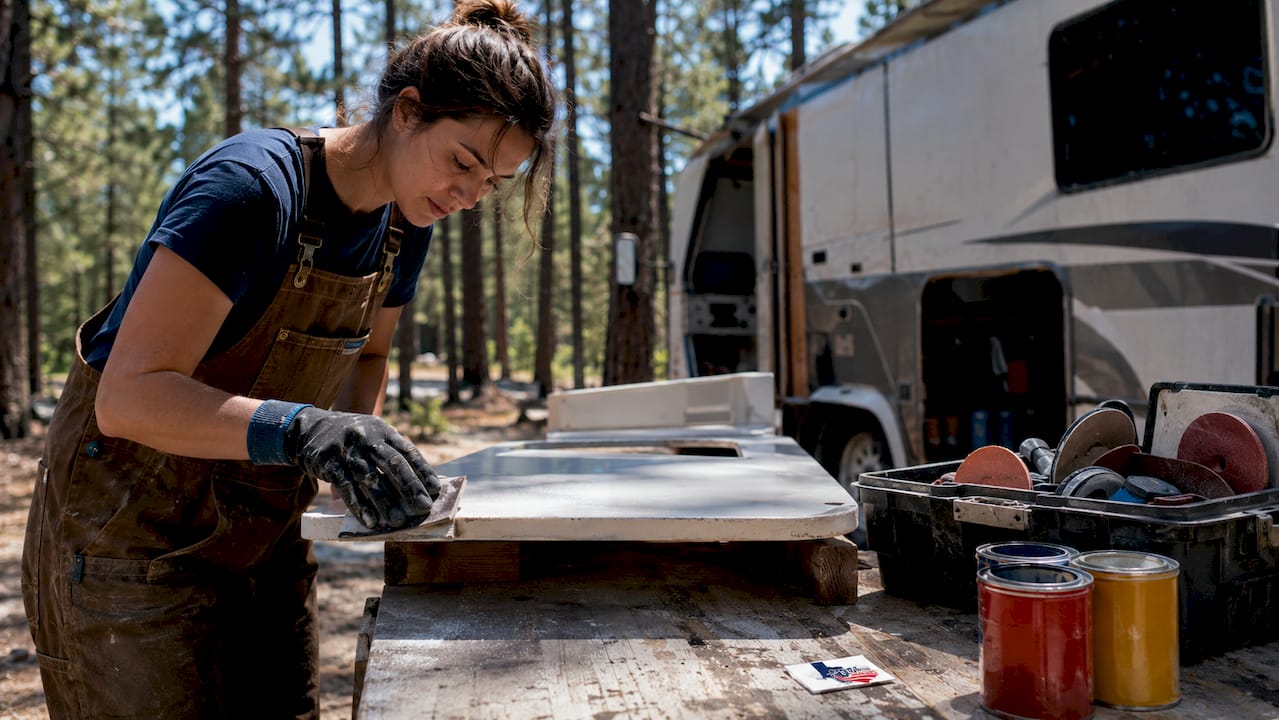
Cost is the question every RV owner asks first, and the honest answer is that it varies widely based on damage severity, vehicle class, and materials required.
| Repair Type | Estimated Cost Range |
|---|---|
| Minor cosmetic fixes (small dents, paint touch-up) | $1,000–$3,000 |
| Fiberglass crack repair or single panel replacement | $2,500–$6,000 |
| Delamination repair (localized section) | $3,000–$8,000 |
| Major collision repair (multi-panel, frame damage) | $10,000–$25,000+ |
RV body work costs range from roughly $1,000 for minor cosmetic fixes up to $25,000 or more for major multi-panel and frame damage. Labor rates at specialized RV shops run approximately $155–$250 per hour, which reflects the skill and equipment required. Paint matching alone adds significant cost because RV-specific color formulas are not the same as standard automotive paint.
Class A motorhomes cost more to repair than travel trailers or camper vans because of their size, the complexity of their wall systems, and the cost of replacement panels. Structural repairs are non-negotiable for safety and always justify the expense over cosmetic-only fixes.
Insurance coordination changes the math considerably. Professional shops document damage clearly and provide written estimates that simplify the claims process. Working with a shop experienced in insurance claims often results in more complete coverage than going it alone. Be cautious of unusually low bids. A shop that skips structural assessment to offer a lower price is creating a larger problem for you down the road.
Why professional repairs beat DIY for central texas RV owners
The Texas Hill Country climate adds a specific layer of complexity to RV body work. Intense UV exposure accelerates paint oxidation and clear coat failure. Heat cycling causes sealants to expand and contract, opening gaps that let moisture in. Humidity after rain events drives delamination in rigs that already have minor seam failures.
Here is why professional service is the right call for most damage scenarios:
- Material complexity: Fiberglass, aluminum, and composite panels each require different repair protocols. Mismatched adhesives or improper surface prep cause failures within one season.
- Delamination risk: DIY pressing of bubbled walls rarely solves the underlying issue. Professional repair involves stopping the leak source and rebuilding the layered wall structure correctly.
- Paint matching: Factory-like results require RV-specific color formulas unavailable at hardware stores or general auto shops.
- Insurance compliance: Insurers require documented, professional repair records for claims. DIY repairs can void coverage on related damage.
- Warranty protection: Professional repairs from reputable shops come with workmanship warranties that DIY work never provides.
Pro Tip: Schedule a full exterior inspection every spring before peak travel season. Central Texas heat and UV exposure make annual seam and paint checks a smart part of any camper maintenance routine.
Key takeaways
Camper body work requires professional-grade materials, precise repair sequences, and RV-specific paint formulas to restore structural integrity and appearance correctly.
| Point | Details |
|---|---|
| Scope of repairs | Body work covers collision damage, delamination, fiberglass cracks, aluminum siding, roof damage, and paint restoration. |
| Repair process matters | Skipping steps in delamination or paint work causes repeat failures; professional shops follow a documented sequence. |
| Cost range is wide | Repairs run from $1,000 for minor cosmetic work to $25,000+ for major structural and multi-panel damage. |
| Insurance coordination helps | Professional shops provide written estimates and damage documentation that simplify insurance claims. |
| Early repair saves money | Ignoring minor damage leads to structural failure and significantly higher repair costs over time. |
What i’ve learned after years of seeing camper damage walk through the door
The biggest misconception I see is that camper body work is basically the same as car body work. It is not. The wall systems on a travel trailer or Class A motorhome are layered composites with insulation, wood or aluminum framing, and bonded outer skins. When a car gets a dent, you reshape metal. When an RV gets a dent, you may be dealing with a cracked fiberglass skin, compressed insulation, and a bent frame rail all at once.
The second misconception is that delamination is cosmetic. Every time I see a rig come in with bubbling sidewalls, the owner tells me they noticed it six months ago and figured it was just the surface. By the time they bring it in, there is water damage behind the wall, sometimes mold, and the repair cost has doubled. Catching delamination early is the single best thing you can do for your RV’s long-term value.
I also want to be direct about low-cost repair offers. If a shop quotes you $800 to fix a section of delamination on a 40-foot Class A, they are either skipping the structural rebuild or using the wrong materials. Both outcomes mean you are back in a shop within a year, paying again. Quality body work costs what it costs because the materials and labor are specialized.
The RV owners who get the best outcomes are the ones who treat their rig like a home, not a truck. Regular inspections, prompt attention to small cracks or seam gaps, and a relationship with a shop that knows RV systems will keep your investment solid for years.
— Jean
Get your camper body work done right in central texas
Class A RV Repairs handles the full range of RV collision and body repair for motorhomes, travel trailers, and fifth wheels across Central Texas, including San Antonio, Boerne, Kerrville, and the Hill Country. The shop is purpose-built for large vehicles, with parts stocked on-site to reduce wait times and a team experienced in fiberglass repair, aluminum siding, structural reconstruction, and factory-matched paint finishing.
Class A RV Repairs works directly with insurance companies to document damage and manage claims, so you are not navigating that process alone. Whether your rig took a hit on the highway or you have noticed bubbling sidewalls after a wet spring, the team is ready to assess the damage and give you a straight answer on what it takes to fix it right. Schedule your inspection and protect your investment before small problems become expensive ones.
FAQ
What does camper body work include?
Camper body work includes exterior panel and siding repair, fiberglass and aluminum fixes, delamination treatment, roof and wall reconstruction, and paint and clear coat restoration. It covers both cosmetic and structural repairs to restore the vehicle to safe, factory condition.
How long does camper body repair take?
Minor repairs typically take 1–2 days, while major collision or structural repairs can take a week or more depending on parts availability and damage scope.
Is delamination serious enough to repair immediately?
Yes. Delamination signals active water intrusion and structural weakening beneath the surface. Delaying repair allows moisture damage to spread, which significantly increases repair costs and can lead to mold growth inside the wall system.
Can i use a regular auto body shop for RV repairs?
General auto body shops lack the RV-specific materials, color formulas, and structural knowledge required for proper camper body work. Using one risks mismatched repairs, voided insurance coverage, and recurring damage from improper fixes.
How do i know if my RV body damage is covered by insurance?
Most comprehensive RV insurance policies cover collision and storm damage to the exterior. A professional shop that provides documented damage reports and written estimates makes the claims process significantly smoother and increases the likelihood of full coverage approval.
Recommended
- RV bodywork repair tutorial: DIY steps for lasting results
- RV Collision Repair & RV Paint Shop | Motorhome Body Repair
- RV body panel materials guide: choose the best for repairs
Jean runs growth strategy at AimSetWin, a performance marketing agency specializing in local service businesses across Texas. he's helped plumbers, HVAC companies, pest control operators, and home service brands build predictable revenue systems using data-driven advertising and conversion optimization.


